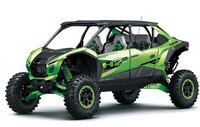
2026 Kawasaki TERYX5 H2 DELUXE
|

|
|
Specifications
|
Model |
TERYX5
|
Category Name |
UTV - Side x Side
|
Year |
2026
|
|
Sale Type |
New
|
Manufacturer |
Kawasaki
|
Color |
Lime Green
|
|
Price |
Contact for price CAD
|
|
|
|
|
Description
| The new Teryx5 H2 high-performance side by side is designed for dune and desert domination. Its 250 horsepower* 999cc in-line four-cylinder supercharged engine is harnessed by a continuously variable transmission (CVT) and a highly rigid frame complemented by long-travel suspension that help balance the engine’s massive power for maximum control. Predictable handling and confident stopping power add to the well-balanced package delivering maximum fun that can be shared with the whole family. |
FEATURING:
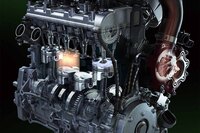
- 253 PS* 999cc IN-LINE 4-CYLINDER SUPERCHARGED ENGINE
- SMOOTH, LINEAR POWER AND ACCELERATION WITH CONTINUALLY VARIABLE TRANSMISSION (CVT)
- ON-THE-FLY ELECTRICALLY SELECTABLE 2WD/4WD & FRONT DIFFERENTIAL LOCK AND ADJUSTABLE POWER MODE SELECTION
- HIGHLY RIGID FRAME WITH INTEGRATED ROLLOVER PROTECTION STRUCTURE (ROPS)
- GROUND-HUGGING LONG-TRAVEL SUSPENSION WITH FORTIFIED A-ARM & TRAILING-ARM SUSPENSION
- 270 mm LARGE-DIAMETER HYDRAULIC DISC BRAKES FOR CONFIDENT STOPPING POWER
- SLEEK, LOW-PROFILE SILHOUETTE WITH AGGRESSIVE FRONT-END DESIGN & LED LIGHTING
- ROOMY, AUTOMOTIVE-STYLE INTERIOR WITH UP TO 5 PASSENGER SEATING
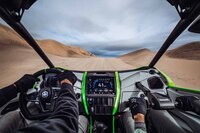
- D-SHAPED STEERING WHEEL WITH TILT STEERING & AUTOMOTIVE-STYLE CONTROL INTERFACE
- 7" HIGH-GRADE FULL-COLOR TFT INSTRUMENTATION WITH SMARTPHONE CONNECTIVITY VIA RIDEOLOGY THE APP POWERSPORTS
- DISTINCTIVE DUAL-EXIT EXHAUST
- 3D KAWASAKI RIVER MARK EMBLEM
|
ADDITIONAL VEHICLE FEATURES:
- 2 high-backed bucket seats up front, 3-person high-backed contoured sport seat in the rear, all equipped with 4-point seatbelts
- Predictable handling with speed-sensitive Electric Power Steering (EPS)
- FOX 3.0 Live Valve Internal Bypass shocks
- Kawasaki Electronic Control Suspension (KECS) with Acceleration Sensors
- 10" Garmin Tread off-road navigation system with audio system capability
- 33" MAXXIS Carnivore Plus tires with 16" aluminum wheels
- Abundant storage & convenience features including USB outlets, DC socket, cup holders, and more
- Plastic roof
|
|
|
|
TECHNOLOGY
|
Technology
 Engine Management Technology Engine Management Technology
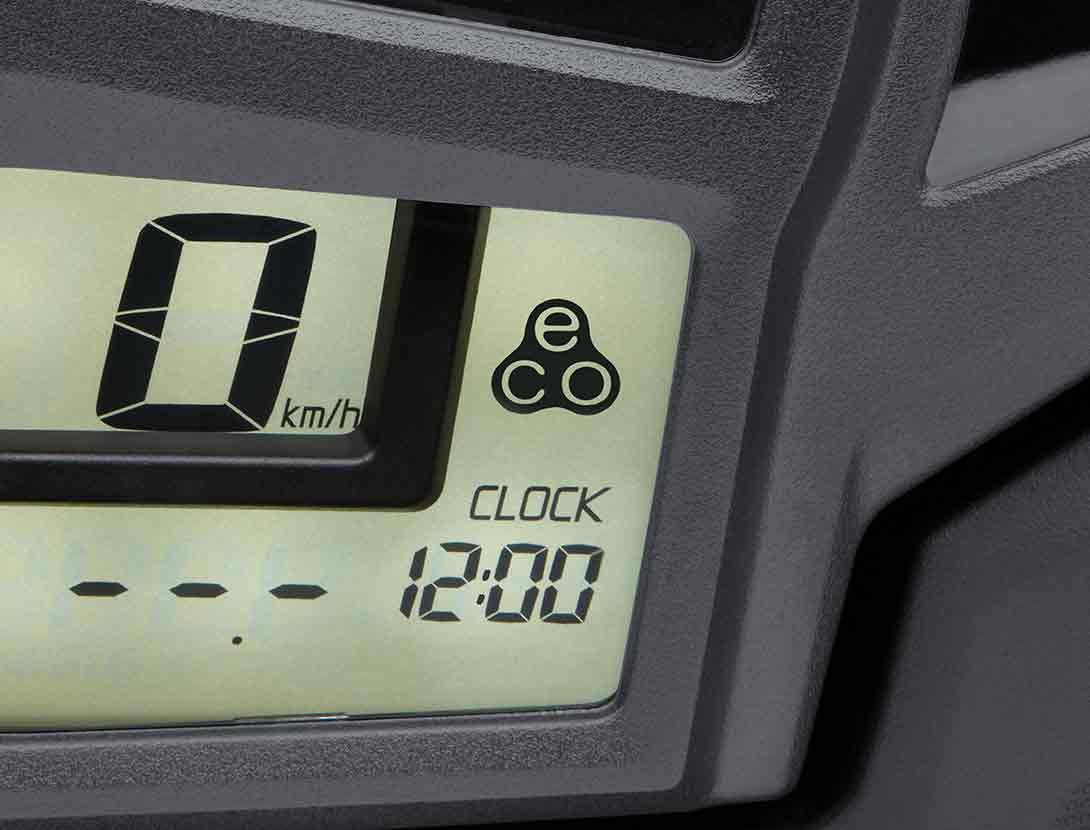
ECONOMICAL RIDING INDICATOR
Using high-precision electronic control for engine management, Kawasaki models can achieve a high level of fuel efficiency. However, fuel consumption is greatly affected by throttle use, gear selection, and other elements under the rider's control. The Economical Riding Indicator is a function that indicates when current riding conditions are consuming a low amount of fuel. The system continuously monitors fuel consumption, regardless of vehicle speed, engine speed, throttle position and other riding conditions. When fuel consumption is low for a given speed (i.e. fuel efficiency is high), an "ECO" mark appears on the instrument panel's LCD screen. By riding so that the "ECO" mark remains on, fuel consumption can be reduced.
While effective vehicle speed and engine speed may vary by model, paying attention to conditions that cause the "ECO" mark to appear can help riders improve their fuel efficiency – a handy way to increase cruising range. Further, keeping fuel consumption low also helps minimize negative impact on the environment.
|
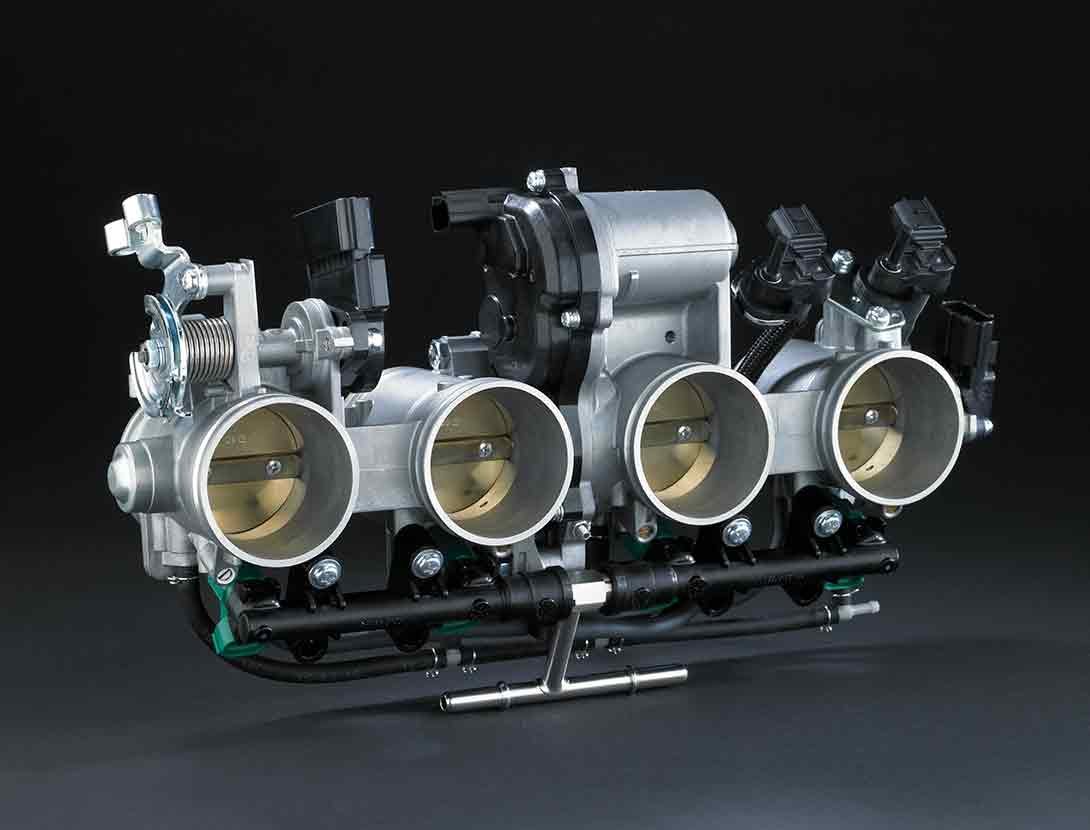 ELECTRONIC THROTTLE VALVES ELECTRONIC THROTTLE VALVES
Kawasaki’s fully electronic throttle actuation system enables the ECU to control the volume of both the fuel (via fuel injectors) and the air (via throttle valves) delivered to the engine. Ideal fuel injection and throttle valve position results in smooth, natural engine response and the ideal engine output. The system also makes a significant contribution to reduced emissions.
Electronic throttle valves also enable more precise control of electronic engine management systems like S-KTRC and KTRC, and allow the implementation of electronic systems like KLCM, Kawasaki Engine Brake Control, and Electronic Cruise Control.
|
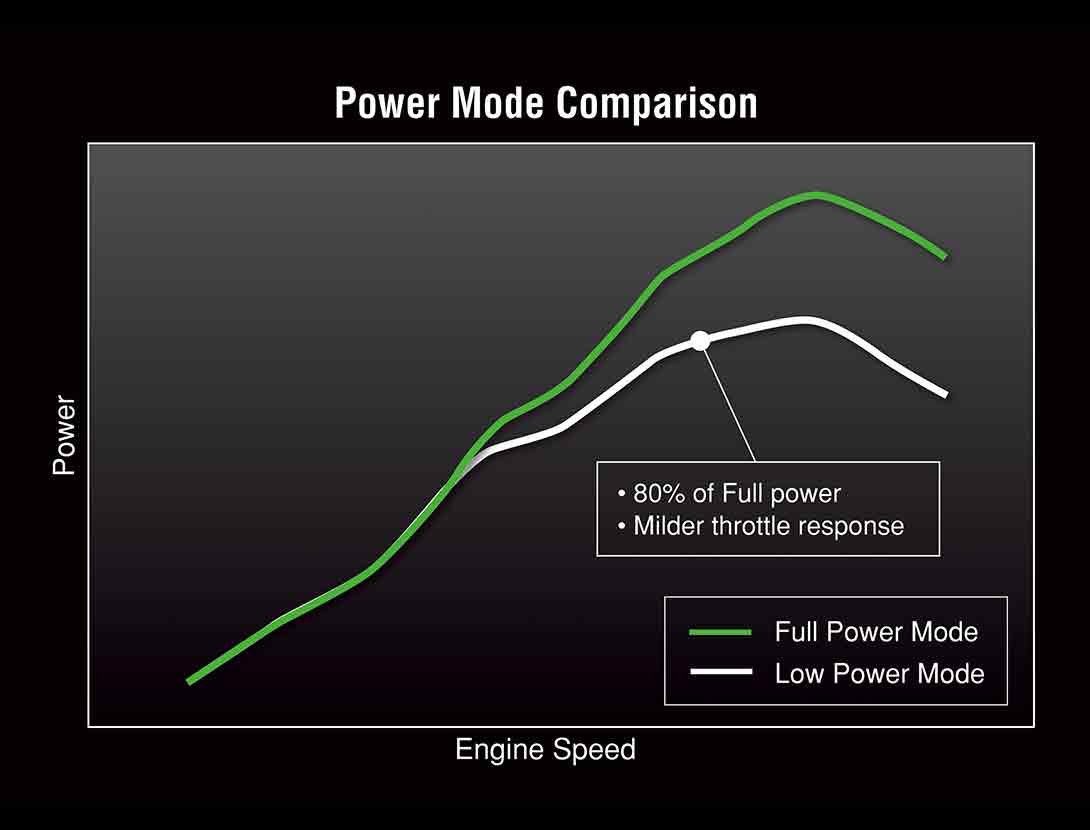 POWER MODES POWER MODES
Models equipped with multiple Power Modes offer riders an easily selectable choice of engine power delivery to suit riding conditions or preference. In addition to Full Power mode, one (Low) or two (Middle, Low) alternate mode(s) in which maximum power is limited and throttle response is milder are provided.
|
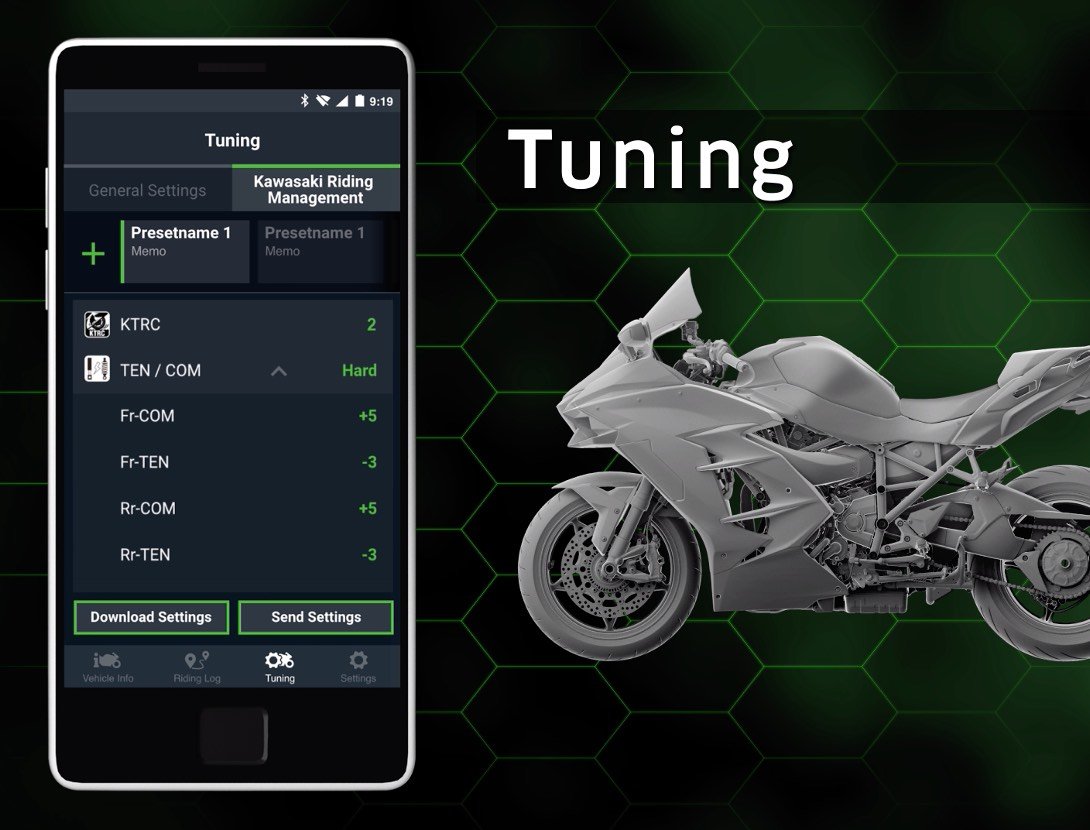 Smartphone Connectivity Smartphone Connectivity
Clever technology enables riders to connect to their motorcycle wirelessly. Using the smartphone application “RIDEOLOGY THE APP,” a number of instrument functions can be accessed, contributing to an enhanced motorcycling experience. Vehicle information (such as the odometer, fuel gauge, maintenance schedule, etc) can be viewed on the smartphone. Riding logs (varies by model, but may include GPS route, gear position, rpm, and other information) can be viewed on the smartphone. When connected, telephone (call, mail) notices are displayed on the instrument panel. Riders can also make changes to their motorcycle’s instrument display settings (preferred units, clock and date setting, etc) via the smartphone. And on certain models, it is even possible to check and adjust vehicle settings (such as Rider Mode, electronic rider support features, and payload settings) using the smartphone.
|
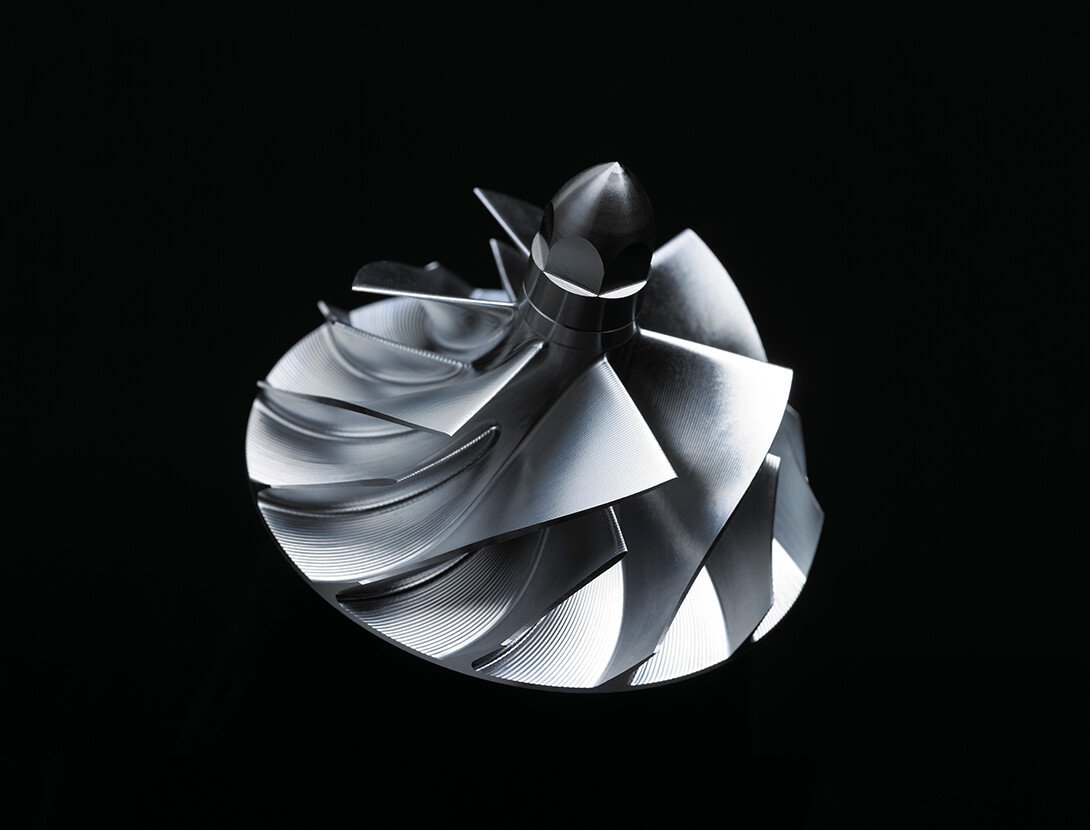 SUPERCHARGED ENGINE SUPERCHARGED ENGINE
Drawing on the know-how and technology possessed by the Kawasaki Heavy Industries, Ltd. (KHI), Kawasaki’s supercharged engine delivers high engine output while maintaining a compact design. The key to achieving this incredible performance lies in the engine’s supercharger – a motorcycle-specific unit designed completely in-house with technology from the Kawasaki Gas Turbine & Machinery Company, Aerospace Company and Corporate Technology Division.
One of the greatest benefits of designing the supercharger in-house and tailoring its design to match the engine’s characteristics was that engineers were able to achieve high-efficiency operation over a wide range of conditions – something that would not have been possible by simply dropping in or trying to adapt an aftermarket automotive supercharger.
The importance of high efficiency in a supercharger is that, as the air is compressed, power-robbing heat gain is minimal. And while many superchargers are able to offer high-efficiency operation in a very limited range of conditions, the Kawasaki supercharger offers high efficiency over a wide range of pressure ratios and flow rates – meaning over a wide range of engine speeds and vehicle speeds. This wide range of efficient operation (similar to having a wide power band) easily translates to strong acceleration. The supercharger’s high efficiency and minimal heat gain also meant that an intercooler was unnecessary, greatly saving weight and space, and enabling the engine’s compact design.
|
Chassis Management Technology
ERGO-FIT
Proper fit is key for rider comfort and control. However, the ideal fit varies from rider to rider, depending on their physical dimensions and riding style.
ERGO-FIT is an interface system designed to allow riders to find their ideal riding position. Various points of the chassis interface (the handlebar, footpegs and seat, etc.) can be adjusted through a combination of interchangeable parts and parts with adjustable positions. This enables a wide range of riders to find a riding position that offers both comfort and control. Feeling at one with their machine, they will be able to experience how Kawasaki machines are fun and rewarding to ride.
*Adjustable parts and their range of adjustability vary by model.
|
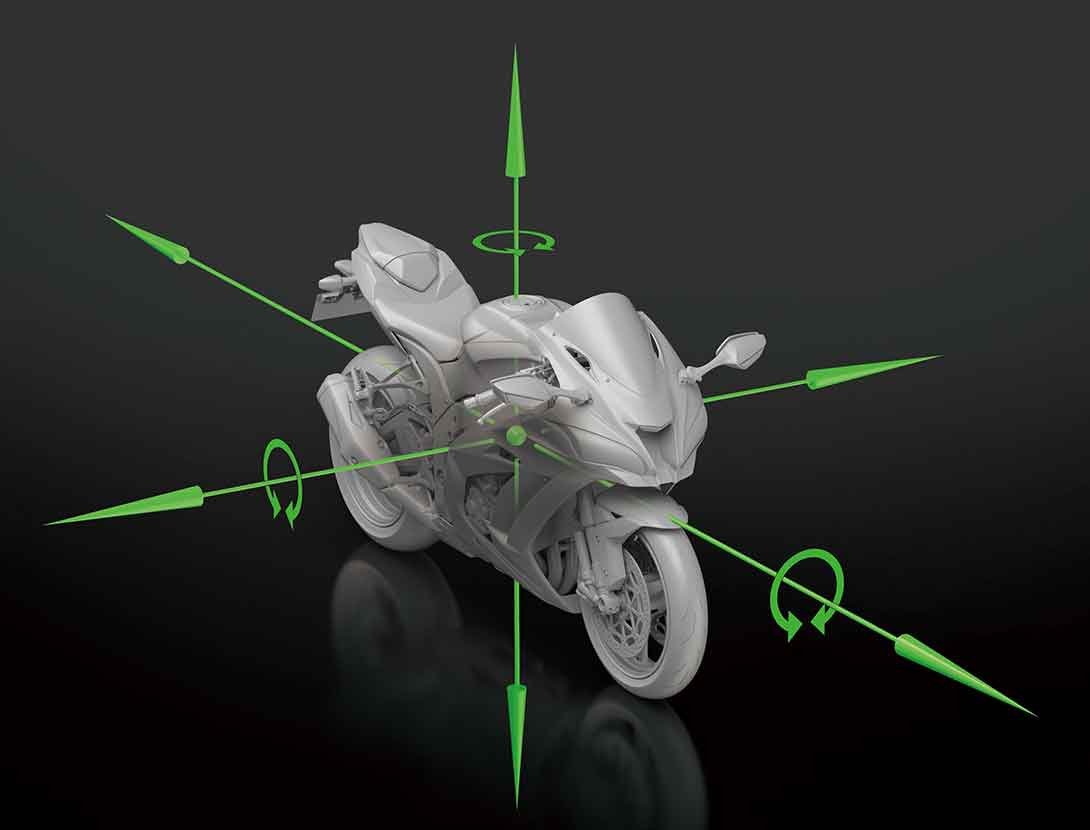 IMU-ENHANCED CHASSIS ORIENTATION AWARENESS IMU-ENHANCED CHASSIS ORIENTATION AWARENESS
The strength of Kawasaki’s cutting-edge electronics has always been the highly sophisticated programming that, using minimal hardware, gives the ECU an accurate real-time picture of what the chassis is doing. Kawasaki’s proprietary dynamic modeling program makes skillful use of the magic formula tire model as it examines changes in multiple parameters, enabling it to take into account changing road and tire conditions.
The addition of an IMU (Inertial Measurement Unit) enables inertia along 6 DOF (degrees of freedom) to be monitored. Acceleration along longitudinal, transverse and vertical axes, plus roll rate and pitch rate are measured. The yaw rate is calculated by the ECU using Kawasaki original software. This additional feedback contributes to an even clearer real-time picture of chassis orientation, enabling even more precise management for control at the limit.
With the addition of the IMU and the latest evolution of Kawasaki’s advanced modeling software, Kawasaki’s electronic engine and chassis management technology takes the step to the next level – changing from setting-type and reaction-type systems to feedback-type systems – to deliver even greater levels of riding excitement.
|
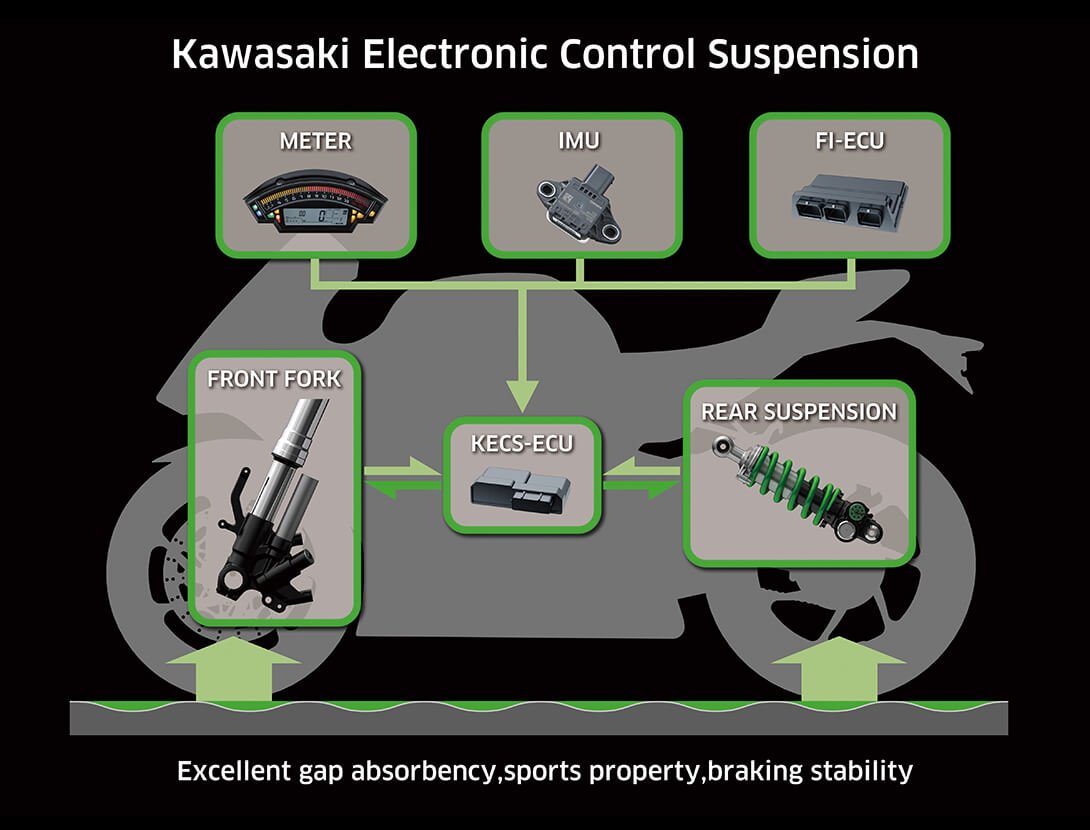 KECS (KAWASAKI ELECTRONIC CONTROL SUSPENSION) KECS (KAWASAKI ELECTRONIC CONTROL SUSPENSION)
KECS adapts to road and riding conditions in real time, providing the ideal amount of damping called for by electronically adjusting damping to suit vehicle speed and suspension stroke speed. Deceleration is also taken into account, which allows the system to help manage pitching that may occur during braking.
Control via solenoid valve with direct actuation enables an extremely quick reaction time, making KECS ideal for sport riding applications, where natural feeling is crucial to feeling at one with the bike. Built-in stroke sensors on both the fork and rear shock provide real-time stroke speed and compression information. Input from the sensor coils to the KECS ECU is complemented by information provided by the IMU (acceleration/deceleration) and the FI ECU (vehicle speed). The KECS ECU then directs current to the solenoids to adjust damping as required by the situation.
Selectable modes allow riders to choose softer or firmer base settings.
|
|
|
POWER
|
Power
186.2 kW* {253 PS*} / 9,000 rpm (*This vehicle’s engine output was measured according to ISO standard 4106.)
Engine
999cc, liquid-cooled, 4-stroke, DOHC 16-valve in-line four
Torque
198.3 Nm {20.2 kgfm} / 8,800 rpm
Ignition
Digital
Starting
Electric
Final_Drive
2WD/4WD, shaft, dual-mode front differential
Fuel_System
Fuel injection: ø40 mm x 4 with dual injection
Lubrication
Forced lubrication, wet sump with liquid-cooled oil cooler
Transmission
Dual-range (high/low) CVT with reverse
Bore_x_Stroke
92.0 x 75.1 mm
Compression_Ratio
73.4 x 59.0 mm
|
|
CAPABILITY
|
Frame
Ladder type, tubular steel
Steering
Rack and pinion with Electric Power Steering
Rear_Tires
MAXXIS Carnivore Plus 33 x 10.00R16, with bead-lock wheels
Front_Tires
MAXXIS Carnivore Plus 33 x 10.00R16, with bead-lock wheels
Rear_Brakes
Dual ø270 mm discs with twin-piston (ø38 mm x2) calipers
Front_Brakes
Dual ø270 mm discs with three-piston (ø34-38-34 mm) calipers
Rake_/_Trail
8.0° / 53 mm
Parking_Brake
Auto-adjust mechanical disc
Steering_Angle_(L/R)
36° (IN) / 29° (OUT), 36° (IN) / 29° (OUT)
Rear_Suspension_/_Wheel_Travel
4-Link Trailing Arm rear suspension, FOX 3.0 Live Valve Internal Bypass shocks with piggyback reservoir, KECS-controlled compression damping, and manually-adjustable spring preload / 609 mm (24.0 in)
Front_Suspension_/_Wheel_Travel
Double wishbone, FOX 3.0 Live Valve Internal Bypass shocks with piggyback reservoir, KECS-controlled compression damping, and manually-adjustable spring preload / 589 mm (23.2 in)
|
|
DETAILS
|
Lighting
2x LED headlights, 2x accent lights
Warranty
6 months
Wheelbase
3,200 mm (126.0 in)
Seat_Height
810 mm (front) / 820 mm (rear L&R) / 850 mm (rear centre) (31.9 in (front) / 32.3 in (rear L&R) / 33.5 in (rear centre))
Tread_(F/R)
1,655 mm (65.2 in) / 1,630 mm (64.2 in)
Curb_Weight*
1,136 kg (2,504 lb)
Fuel_Capacity
56 litres
Road_Clearance
410/420 mm (standard/max preload) (16.1/16.5 in (standard/max preload))
Turning_Radius
7.6 m (24.9 ft)
Instrumentation
7” high-grade full-colour TFT LCD screen with speedometer, tachometer, fuel gauge, gear indicator (L, H, N, R), Driving Mode (2WD/4WD/4WD+Diff Lock), Power Mode (Full/Mid/Low), Suspension Mode (Soft/Normal/Firm), clock, CVT temperature, boost temperature; selectable display that includes: digital tachometer, odometer, dual trip meters, total time, trip time, average speed, engine temperature, intake air temperature, battery voltage; connected indicator, Economical Riding Indicator, maintenance reminder (2 driver-selectable reminders), and a range of indicators and warning lamps
Seating_Capacity
5
Cargo_Bed_Capacity
136 kg (300 lb)
Vehicle_Load_Capacity
488 kg (1,076 lb)
Dimensions_(L_x_W_x_H)
4,050 x 1,880 x 1,875 mm (159.4 x 74.0 x 73.8 in)
Estimated_Dry_Weight**
1,075 kg (2,370 lb)
Kawasaki_Protection_Plus
12 / 24 / 36 / 48 months
Cargo_Bed_Dimensions_(LxWxH)
370 x 840 x 230 mm (14.6 x 33.1 x 9.1 in)
|
