




ID # 40119678

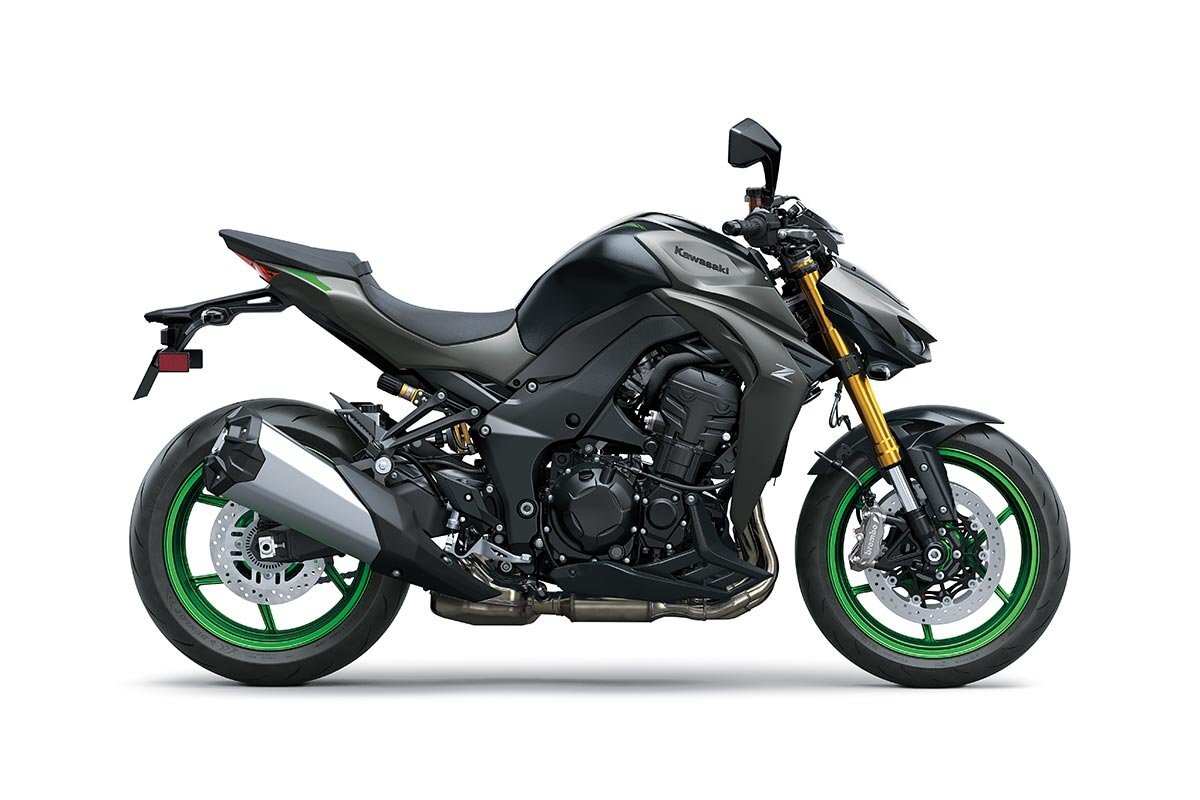
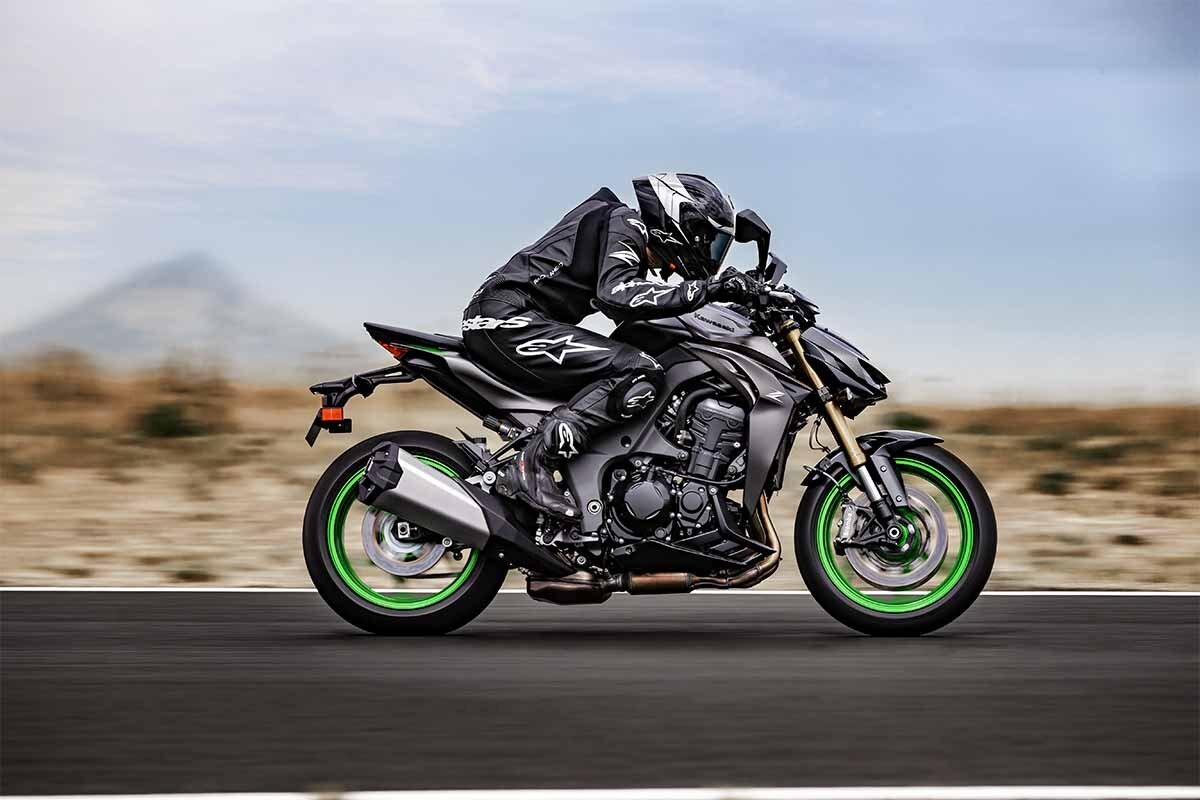
2026 Kawasaki Z1100 SE

Call for Price
Overview

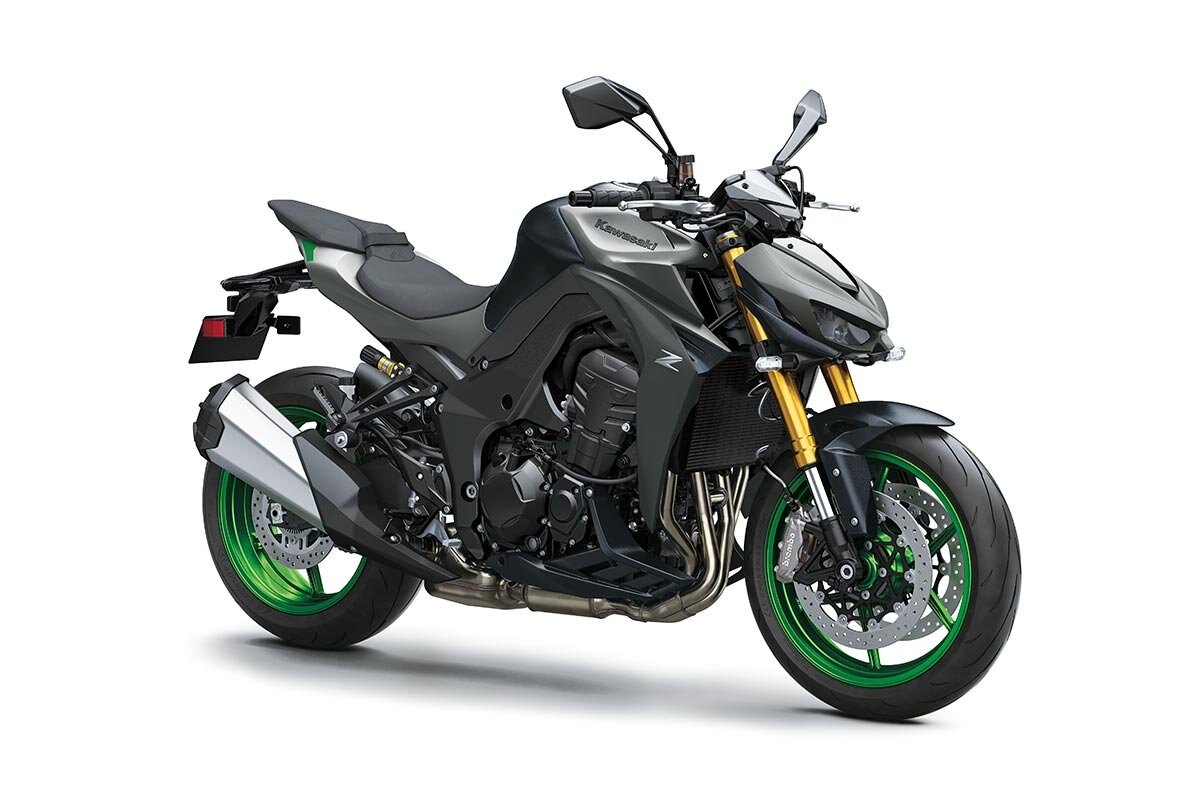
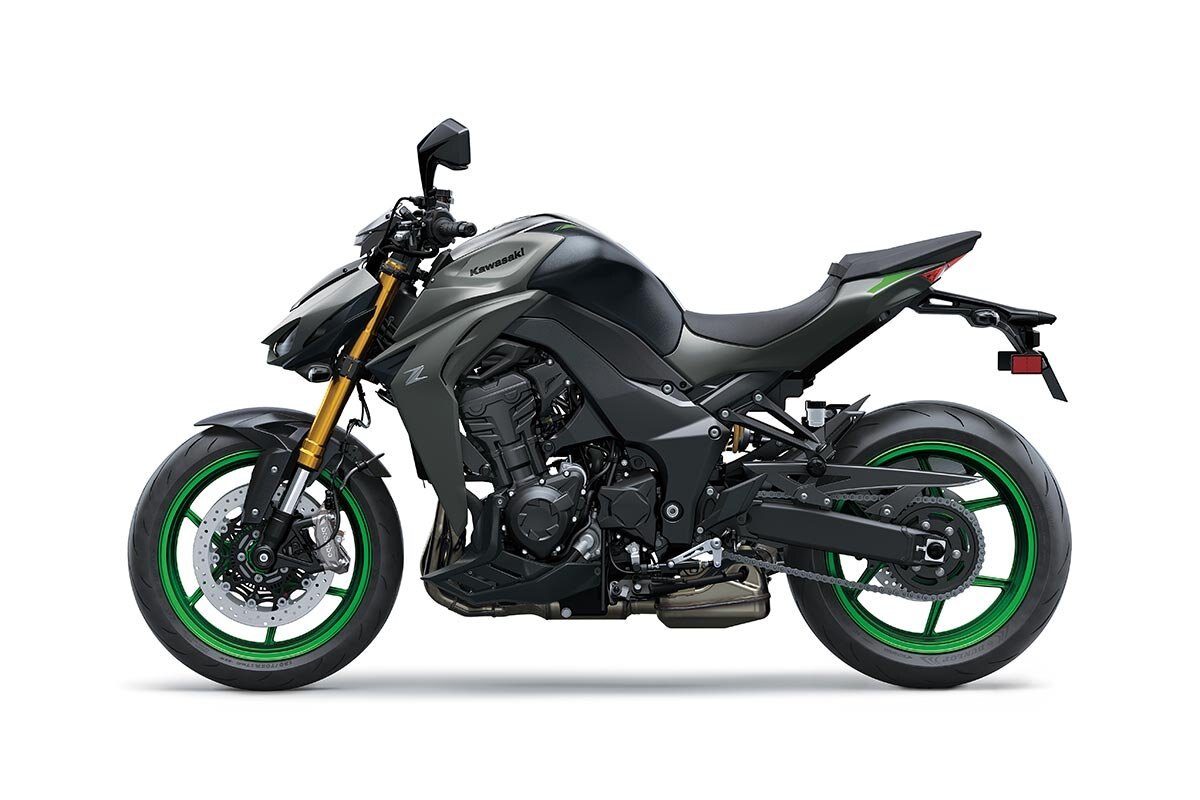
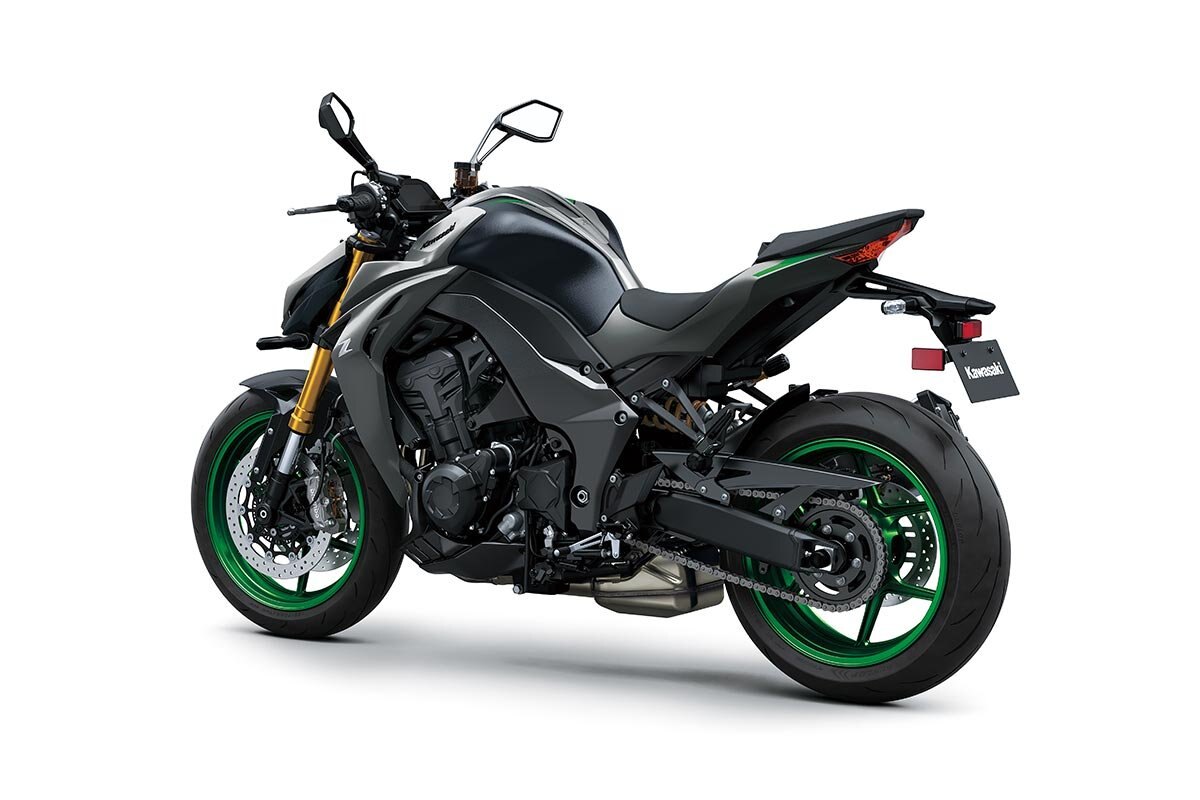
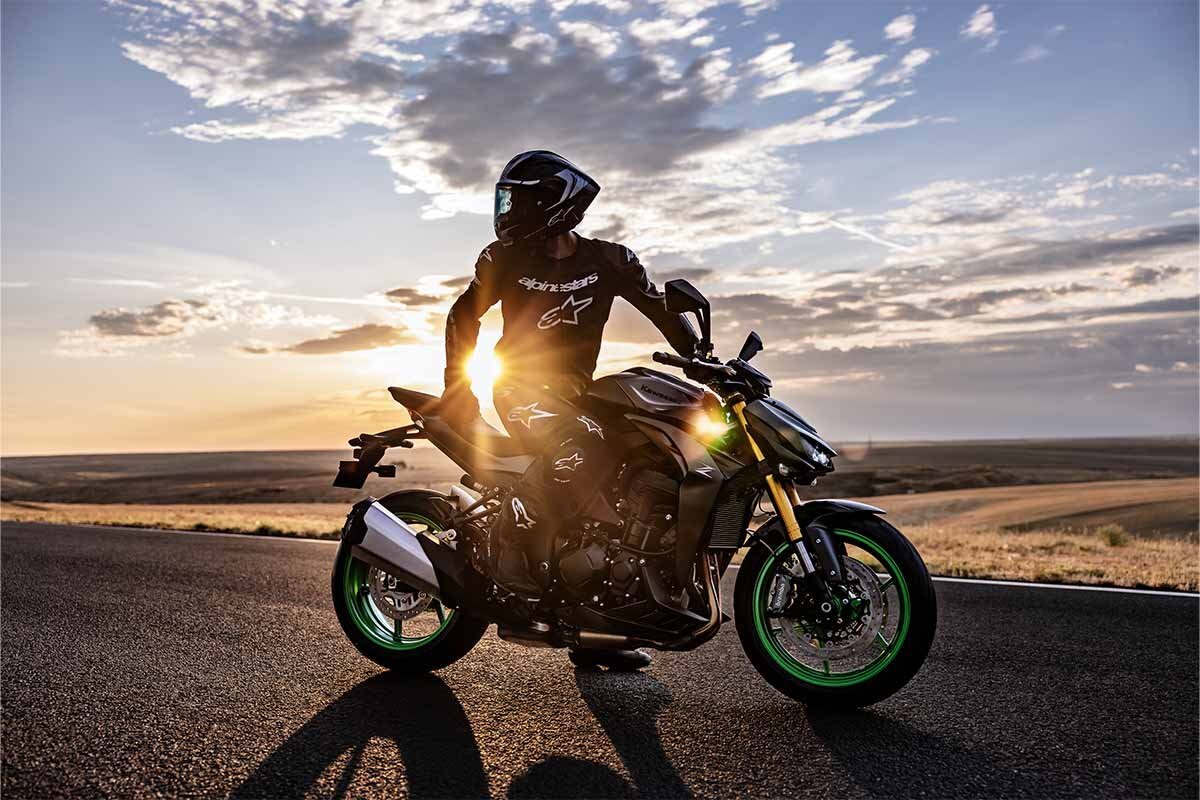
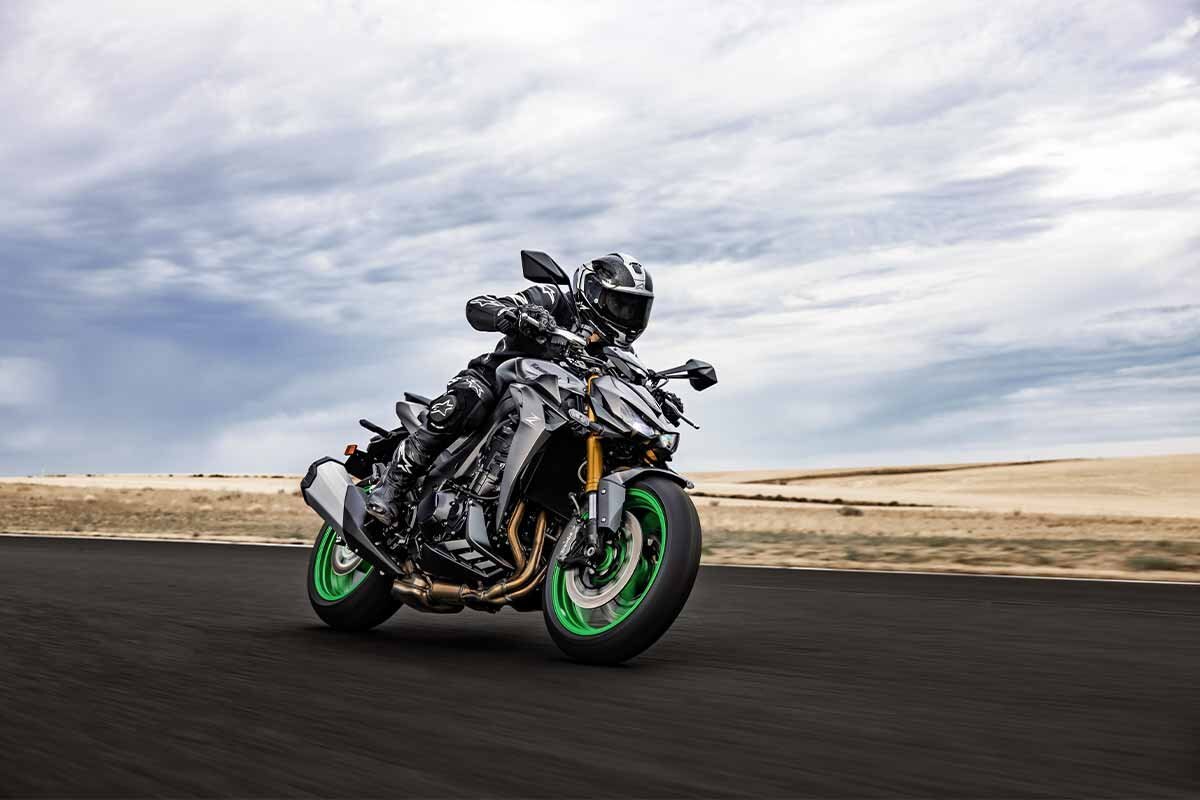
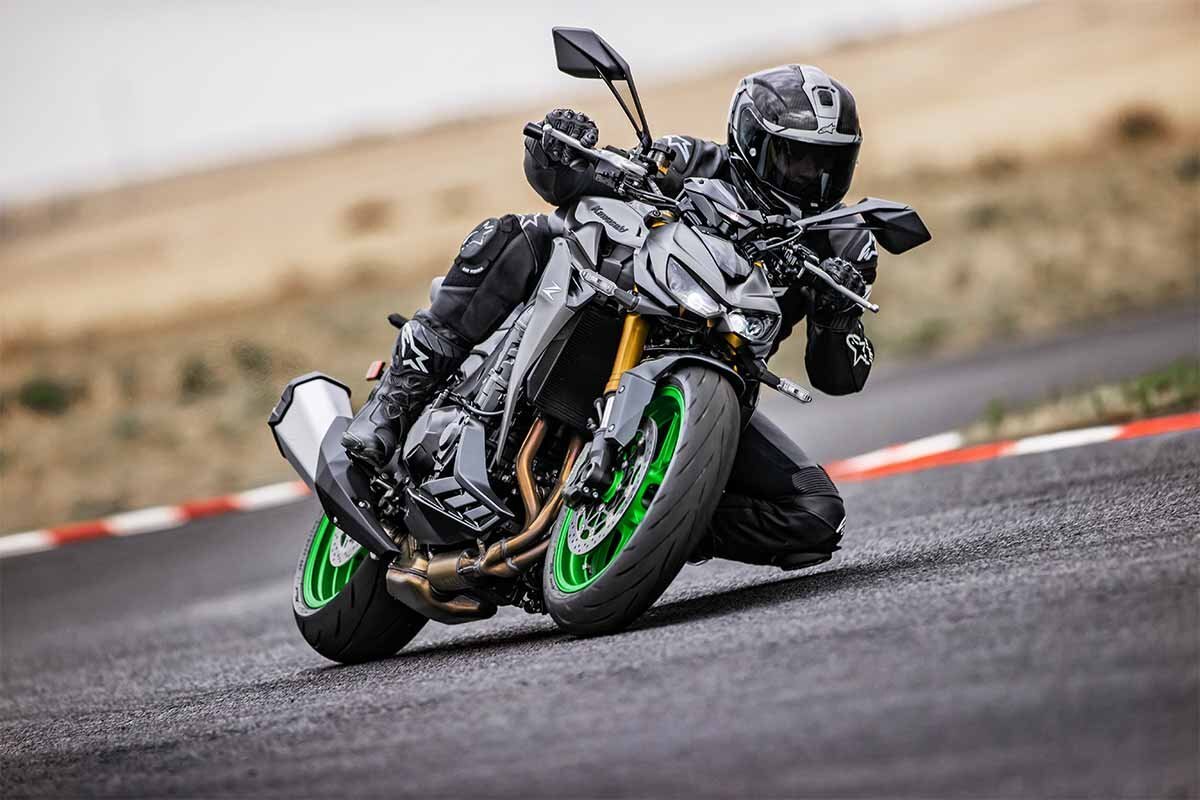
The Z1100 is the pinnacle of Kawasaki’s unique Sugomi performance and styling philosophy condensed into our largest-displacement supernaked Z model, taking its rightful place as the new leader of Kawasaki's naturally aspirated Z family.

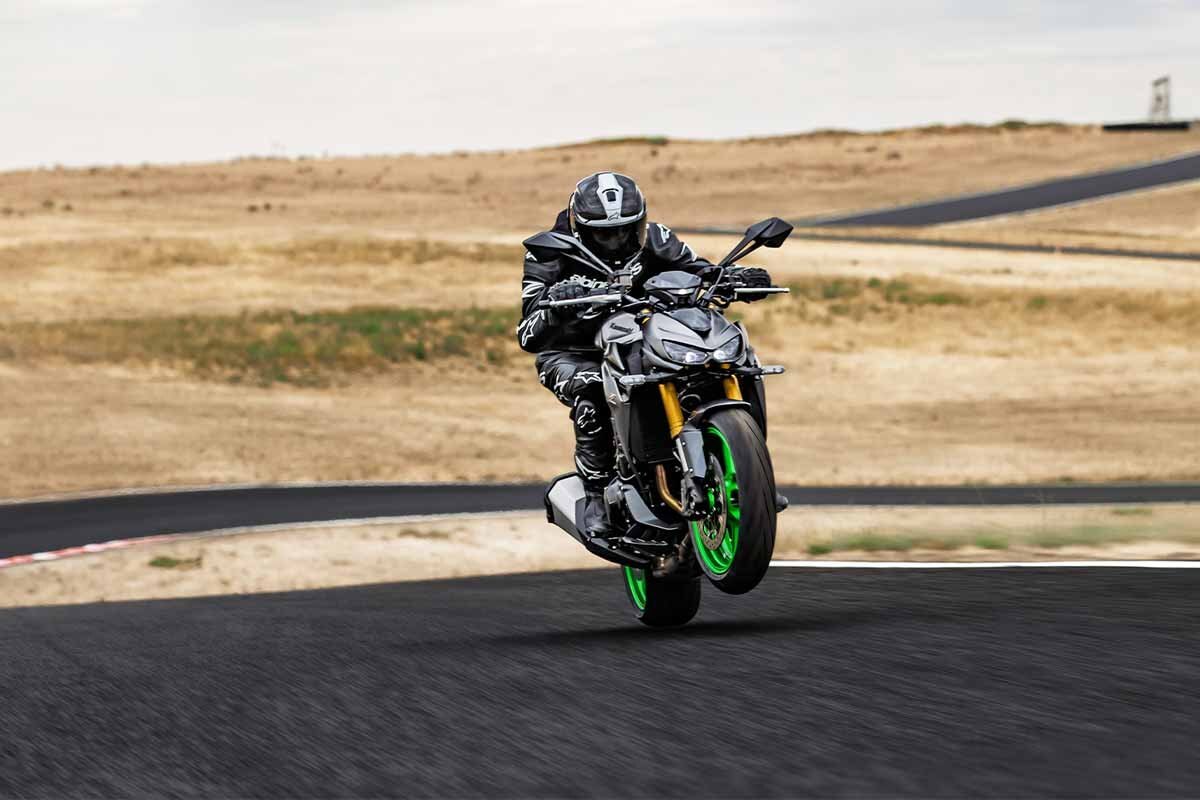
This crouching predator is ready to strike with its torquier 1,099cc engine combined with an impressive suite of advanced rider support technologies appealing to performance-focused and sport-minded riders who are looking to experience the ultimate in excitement and sensory stimulation.

FEATURING:

  • FIERCE AND INTENSE SUGOMI DESIGN
  • NEW 1,099cc LIQUID-COOLED IN-LINE FOUR ENGINE
  • NEW IMU-EQUIPPED ELECTRONIC RIDING SUPPORT TECHNOLOGY WITH ADDITION OF ELECTRONIC THROTTLE VALVES (ETV)
  • NEW DUAL-DIRECTION KAWASAKI QUICK SHIFTER (KQS)
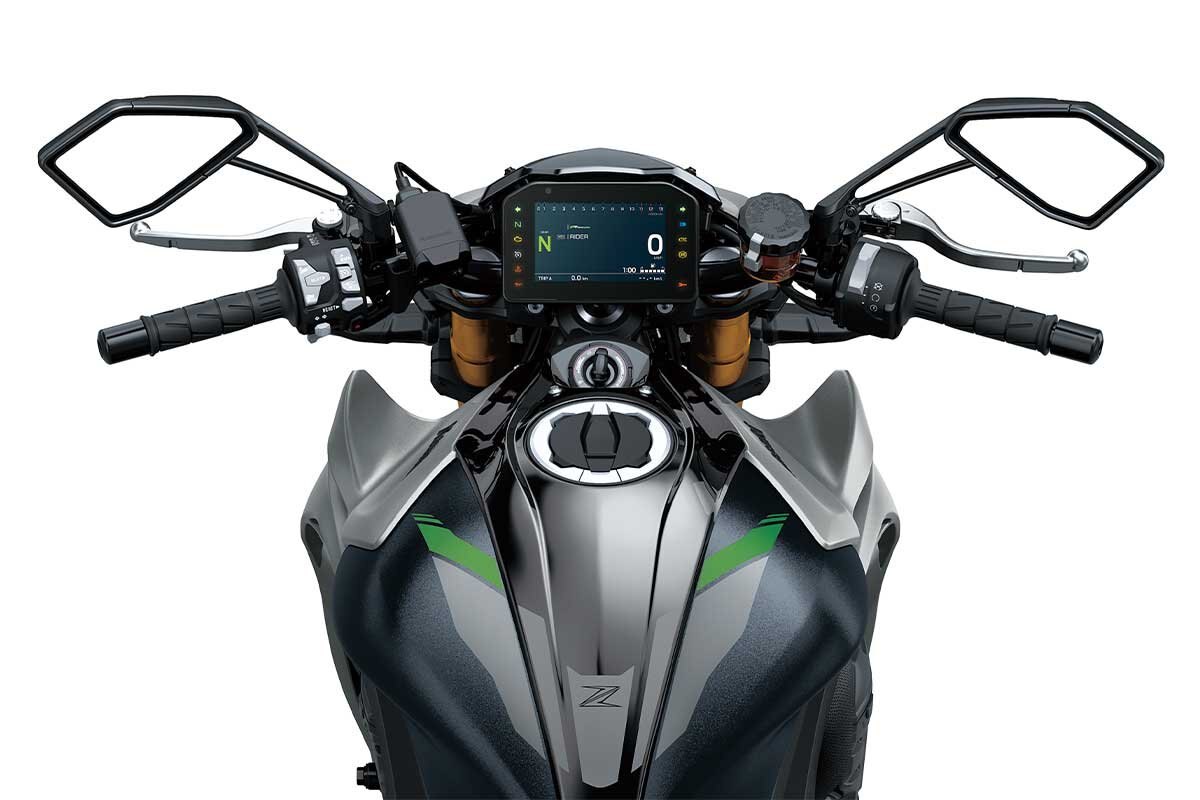
  • NEW 5” TFT COLOUR INSTRUMENTATION WITH LEAN-ANGLE INDICATOR
  • NEW SMARTPHONE CONNECTIVITY VIA RIDEOLOGY THE APP MOTORCYCLE WITH AVAILABLE VOICE COMMAND AND TURN-BY-TURN NAVIGATION*

ADDITIONAL VEHICLE FEATURES:

  • New Kawasaki Corner Management Function (KCMF)
  • New Kawasaki TRaction Control (KTRC)
  • New Kawasaki Intelligent anti-lock Brake System (KIBS)
  • New Power Mode selection
  • New Integrated Riding Modes
  • New Electronic Cruise Control
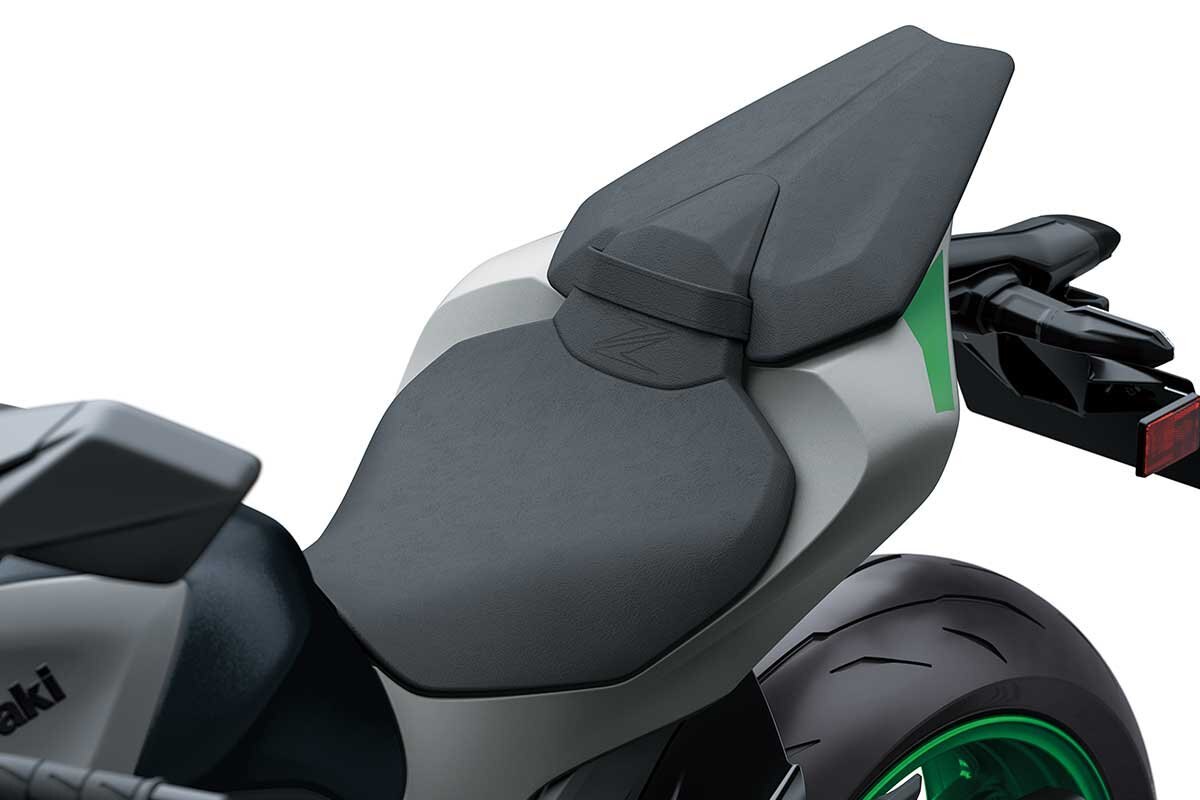
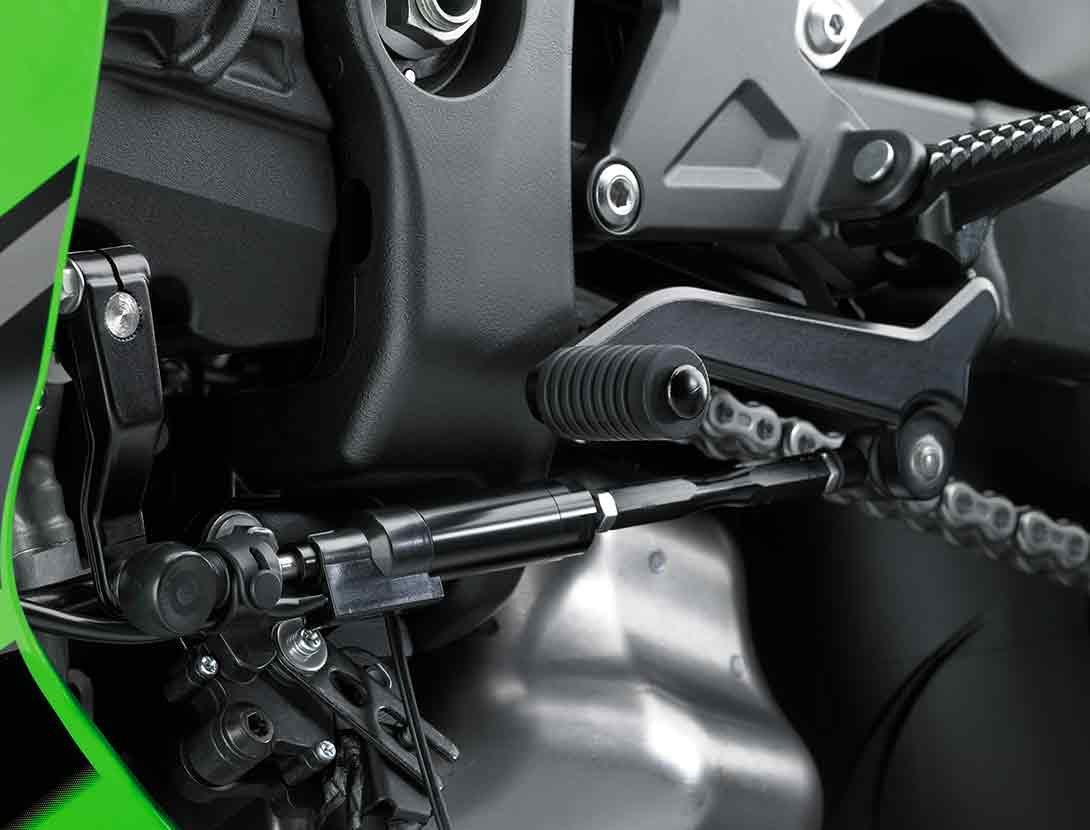
  • Improved riding position for enhanced controllability
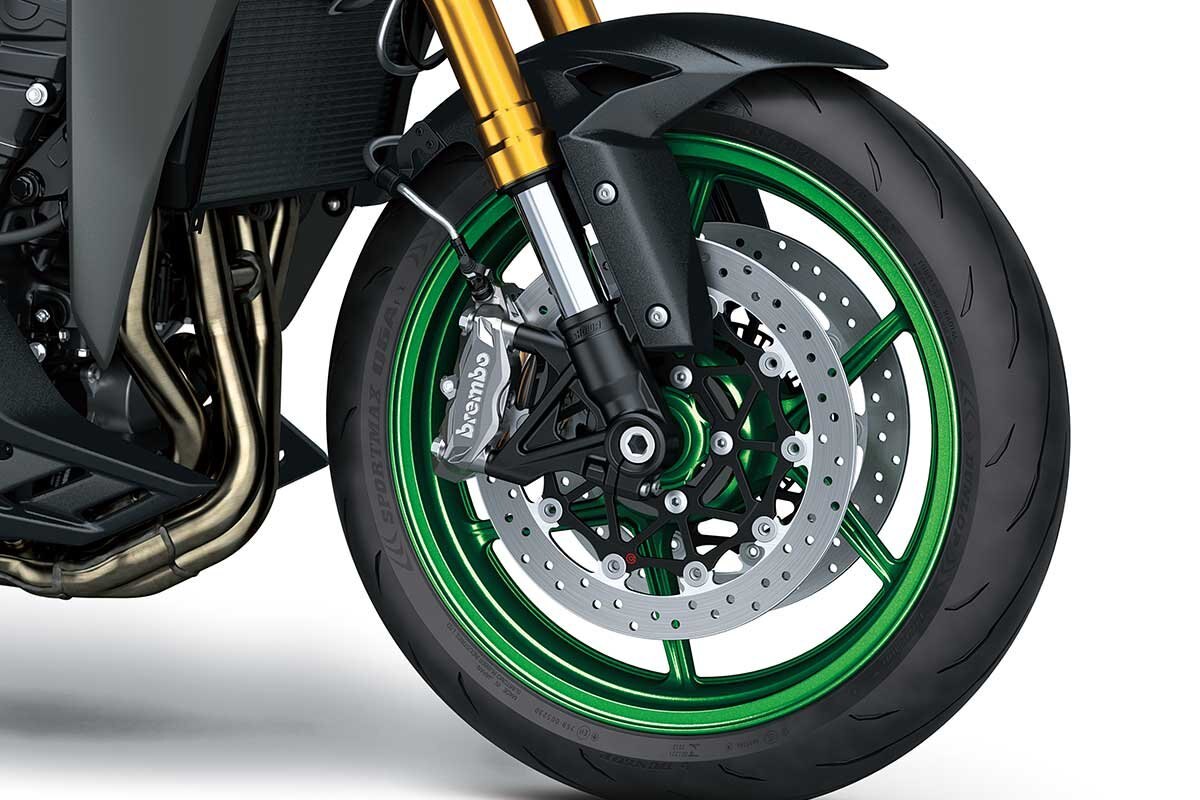
  • New Dunlop Sportmax Q5A tires
  • Brembo front brake package with steel-braided lines
  • Gold-coloured fork outer tubes
  • Öhlins S46 rear shock with remote preload adjuster
  • Handlebar-mounted USB-C outlet

Specifications
Model
Z
Category Name
Motorcycles
Year
2026
Sale Type
New
Manufacturer
Kawasaki
Color
Metallic Matte Graphenesteel Gray / Metallic Matte Carbon Gray / Ebony
technology

Engine Management Technology

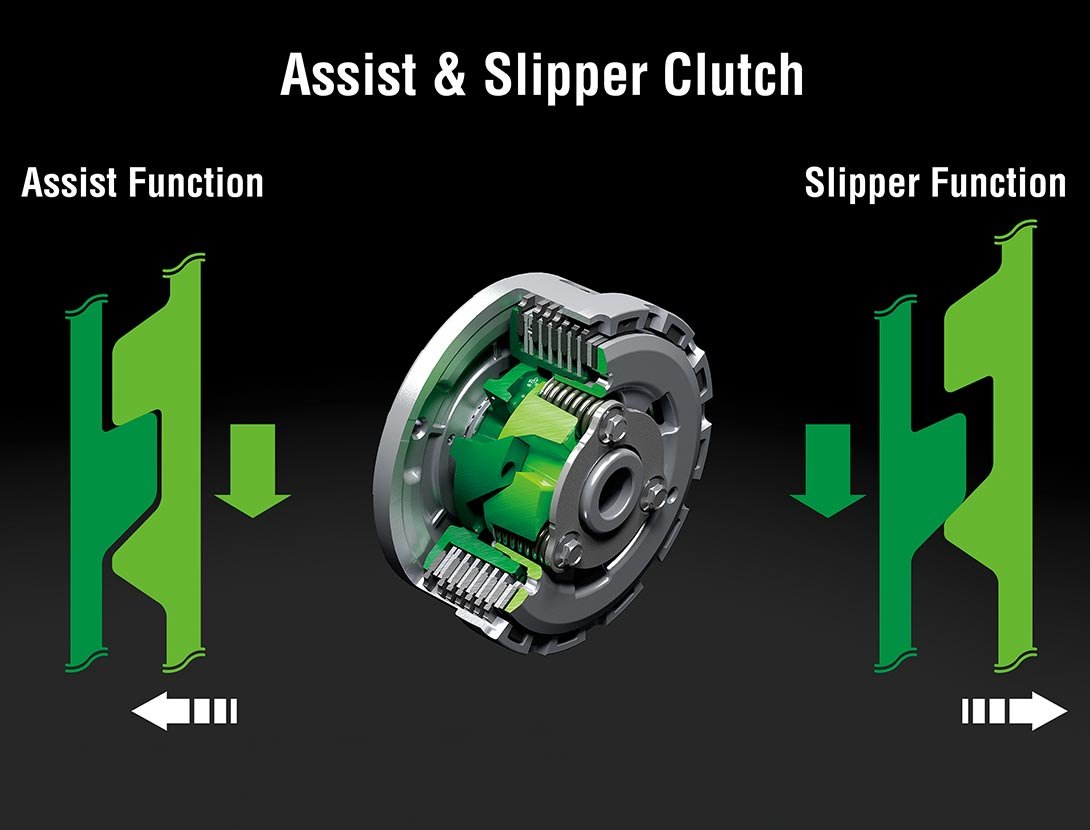
ASSIST & SLIPPER CLUTCH 2026 Kawasaki Z1100 SE

Based on feedback from racing activities, the Assist & Slipper Clutch uses two types of cams (an assist cam and a slipper cam) to either drive the clutch hub and operating plate together or apart.

Under normal operation, the assist cam functions as a self-servo mechanism, pulling the clutch hub and operating plate together to compress the clutch plates. This allows the total clutch spring load to be reduced, resulting in a lighter clutch lever feel when operating the clutch.

When excessive engine braking occurs – as a result of quick downshifts (or an accidental downshift) – the slipper cam comes into play, forcing the clutch hub and operating plate apart. This relieves pressure on the clutch plates to reduce back-torque and helps prevent the rear tire from hopping and skidding. This race-style function is particularly useful when sport or track riding.

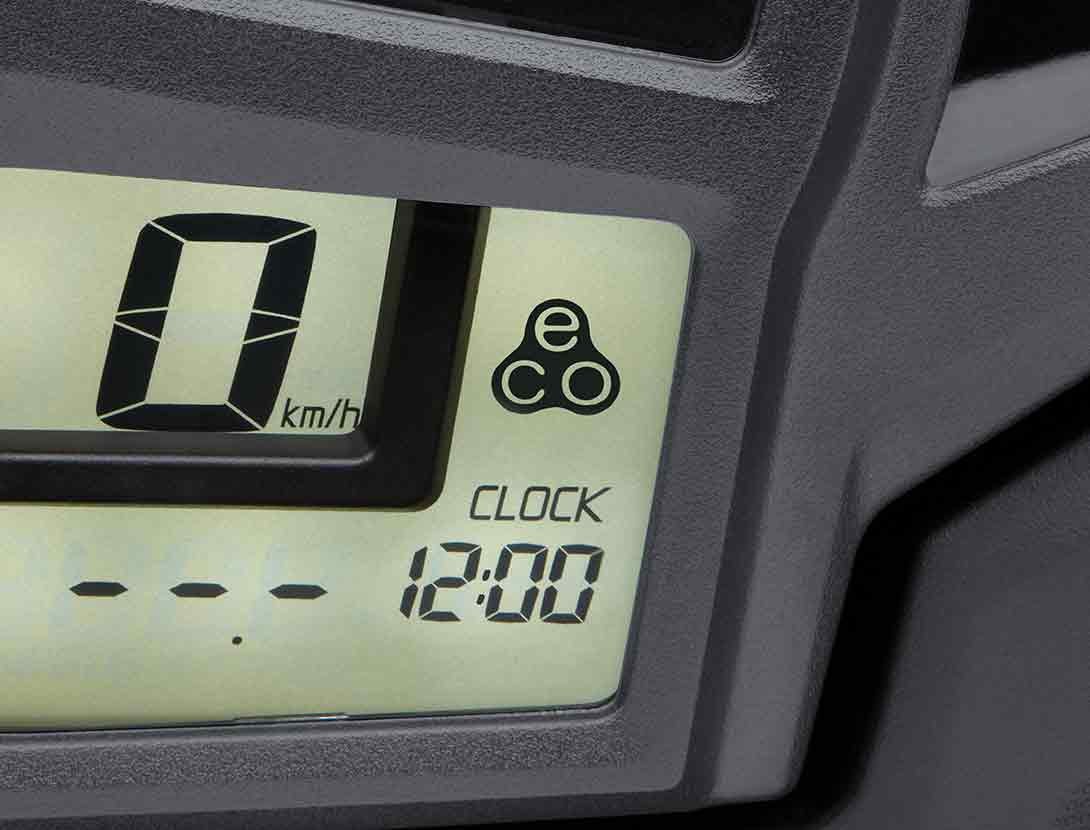
2026 Kawasaki Z1100 SEECONOMICAL RIDING INDICATOR

Using high-precision electronic control for engine management, Kawasaki models can achieve a high level of fuel efficiency. However, fuel consumption is greatly affected by throttle use, gear selection, and other elements under the rider's control. The Economical Riding Indicator is a function that indicates when current riding conditions are consuming a low amount of fuel. The system continuously monitors fuel consumption, regardless of vehicle speed, engine speed, throttle position and other riding conditions. When fuel consumption is low for a given speed (i.e. fuel efficiency is high), an "ECO" mark appears on the instrument panel's LCD screen. By riding so that the "ECO" mark remains on, fuel consumption can be reduced.

While effective vehicle speed and engine speed may vary by model, paying attention to conditions that cause the "ECO" mark to appear can help riders improve their fuel efficiency – a handy way to increase cruising range. Further, keeping fuel consumption low also helps minimize negative impact on the environment.

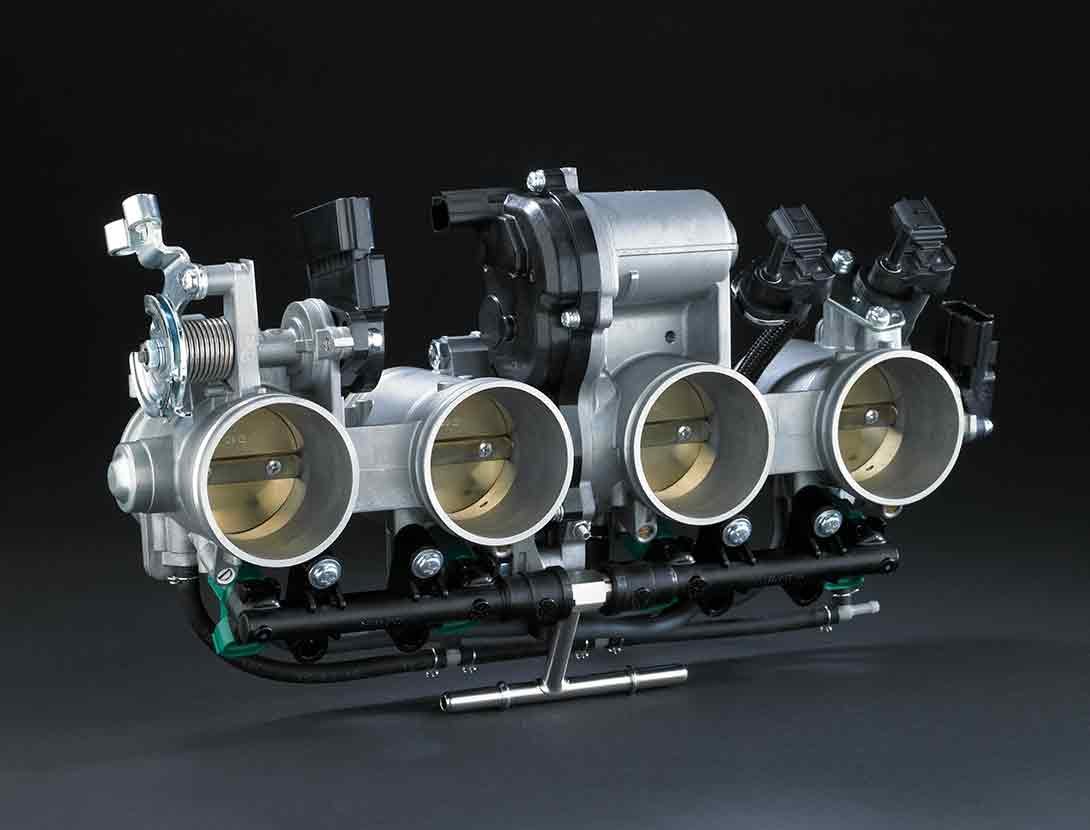
2026 Kawasaki Z1100 SEELECTRONIC THROTTLE VALVES

Kawasaki’s fully electronic throttle actuation system enables the ECU to control the volume of both the fuel (via fuel injectors) and the air (via throttle valves) delivered to the engine. Ideal fuel injection and throttle valve position results in smooth, natural engine response and the ideal engine output. The system also makes a significant contribution to reduced emissions.

Electronic throttle valves also enable more precise control of electronic engine management systems like S-KTRC and KTRC, and allow the implementation of electronic systems like KLCM, Kawasaki Engine Brake Control, and Electronic Cruise Control.

ELECTRONIC CRUISE CONTROL

Electronic Cruise Control allows a desired speed (engine rpm) to be maintained with the simple press of a button. Once activated, the rider does not have to constantly apply the throttle. This reduces stress on the right hand when traveling long distances, enabling relaxed cruising and contributing to a high level of riding comfort.

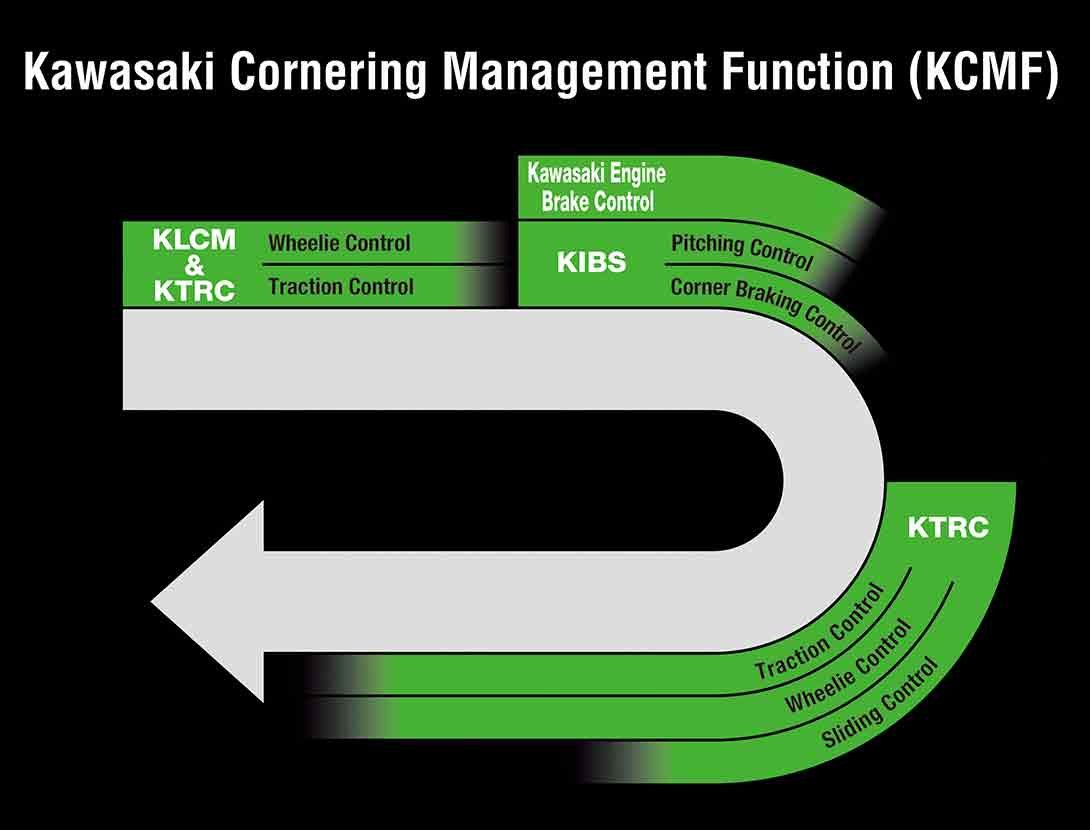
2026 Kawasaki Z1100 SEKCMF (KAWASAKI CORNERING MANAGEMENT FUNCTION)
Using the latest evolution of Kawasaki’s advanced modeling software and feedback from a compact IMU (Inertial Measurement Unit) that gives an even clearer real-time picture of chassis orientation, KCMF monitors engine and chassis parameters throughout the corner – from entry, through the apex, to corner exit – modulating brake force and engine power to facilitate smooth transition from acceleration to braking and back again, and to assist riders in tracing their intended line through the corner. The systems that KCMF oversees vary by model, but may include:

• S-KTRC/KTRC (including traction management and wheel lift management)

• KLCM (including traction management and wheel lift management)

 - Designed to optimize acceleration from a stop

• KIBS (including pitching management and corner braking management)

• Kawasaki Engine Brake Control

2026 Kawasaki Z1100 SEKQS (KAWASAKI QUICK SHIFTER)

Designed to help riders maximize their acceleration on the track by enabling clutchless upshifts with the throttle fully open, KQS detects that the shift lever has been actuated and sends a signal to the ECU to cut ignition so that the next gear can be engaged without having to use the clutch. On models that offer clutchless downshifts, during deceleration the system automatically controls engine speed so that the next lower gear can be selected without operating the clutch.

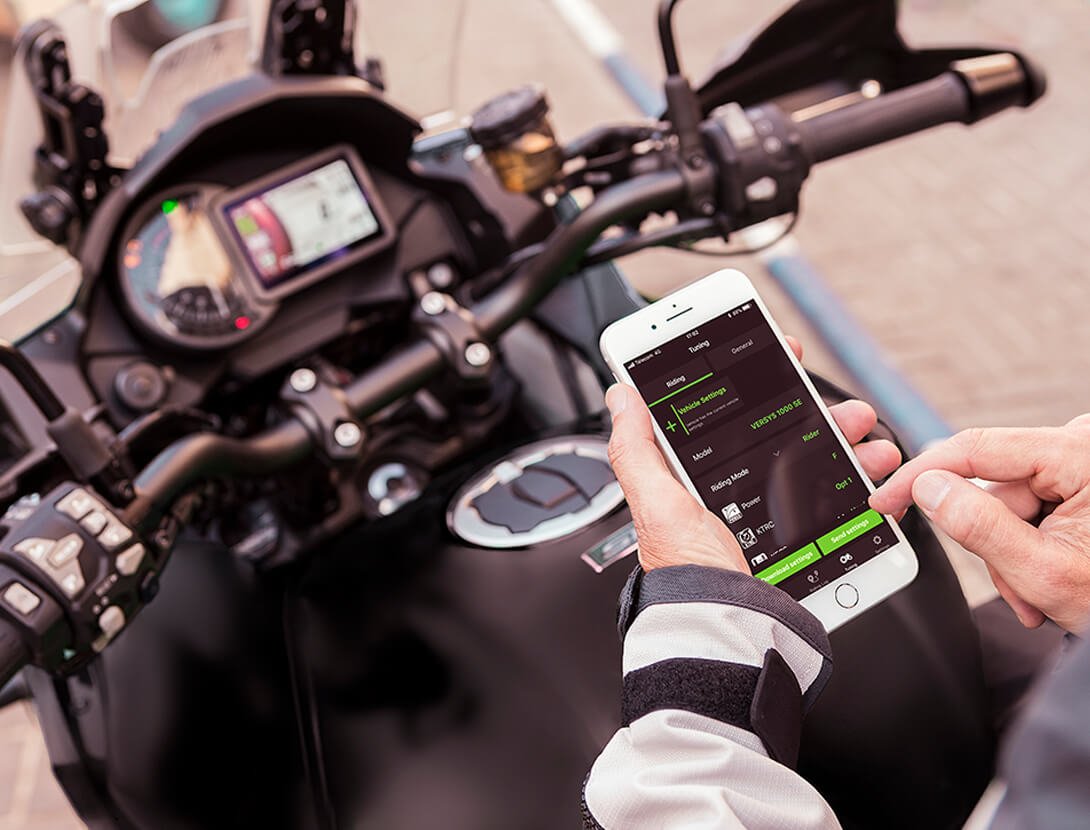
SMARTPHONE CONNECTIVITY 2026 Kawasaki Z1100 SE

Clever technology enables riders to connect to their motorcycle wirelessly. Using the smartphone application “RIDEOLOGY THE APP,” a number of instrument functions can be accessed, contributing to an enhanced motorcycling experience. Vehicle information (such as the odometer, fuel gauge, maintenance schedule, etc) can be viewed on the smartphone. Riding logs (varies by model, but may include GPS route, gear position, rpm, and other information) can be viewed on the smartphone. When connected, telephone (call, mail) notices are displayed on the instrument panel. Riders can also make changes to their motorcycle’s instrument display settings (preferred units, clock and date setting, etc) via the smartphone. And on certain models, it is even possible to check and adjust vehicle settings (such as Rider Mode, electronic rider support features, and payload settings) using the smartphone.

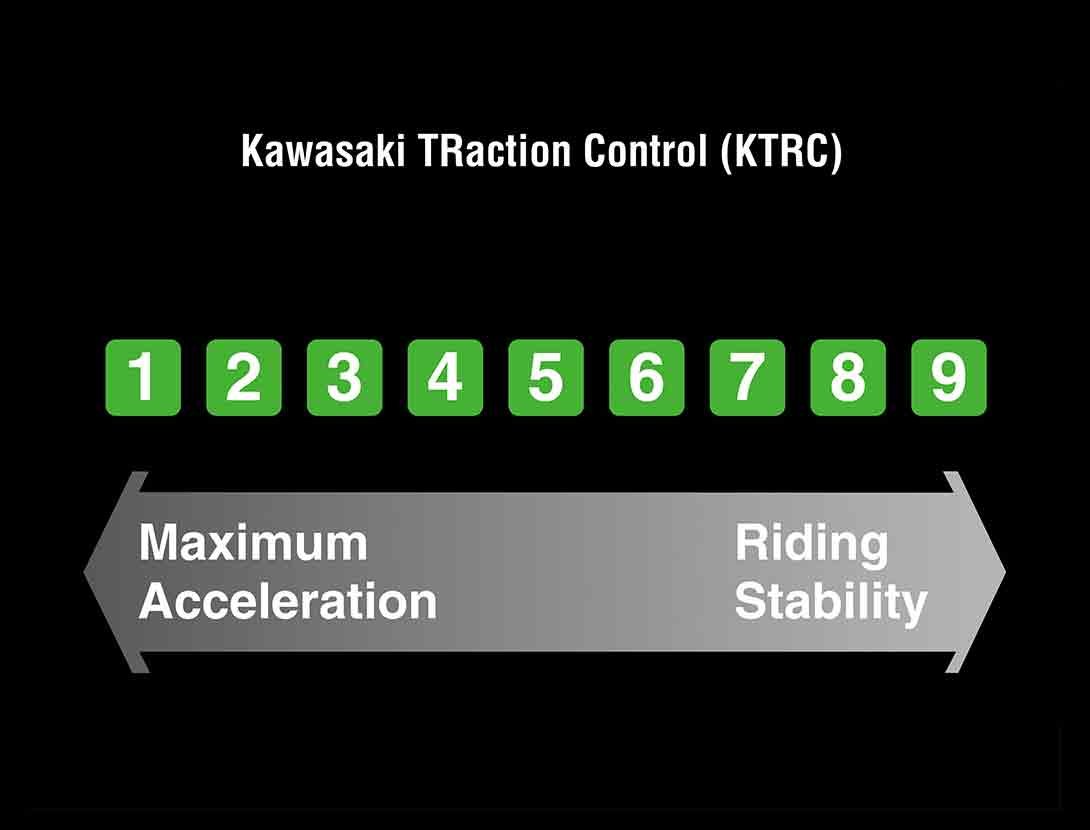
2026 Kawasaki Z1100 SEKTRC (KAWASAKI TRACTION CONTROL)

KTRC, Kawasaki's advanced traction control system provides both enhanced sport riding performance and the peace of mind to negotiate slippery surfaces with confidence. Multiple rider-selectable modes (the number of modes varies by model) offer progressively greater levels of intrusion to suit the riding situation and rider preference.

Less intrusive modes maintain optimum traction during cornering. Designed with sport riding in mind, they facilitate acceleration out of corners by maximizing forward drive from the rear wheel. And because Kawasaki’s sophisticated software bases its dynamic analysis on the chassis’ orientation relative to the track surface (rather than relative to a horizontal plane), it is able to take into account corner camber, gradient, etc., and adapt accordingly.

In the more intrusive modes (and for some models, in any mode), when excessive wheel spin is detected, engine output is reduced to allow grip to be regained, effectively enabling riders to negotiate both short, slippery patches (train tracks or manhole covers) and extended stretches of bad roads (wet pavement, cobblestone, gravel) with confidence.

Models equipped with IMU incorporate chassis-orientation feedback to offer even more precise management.

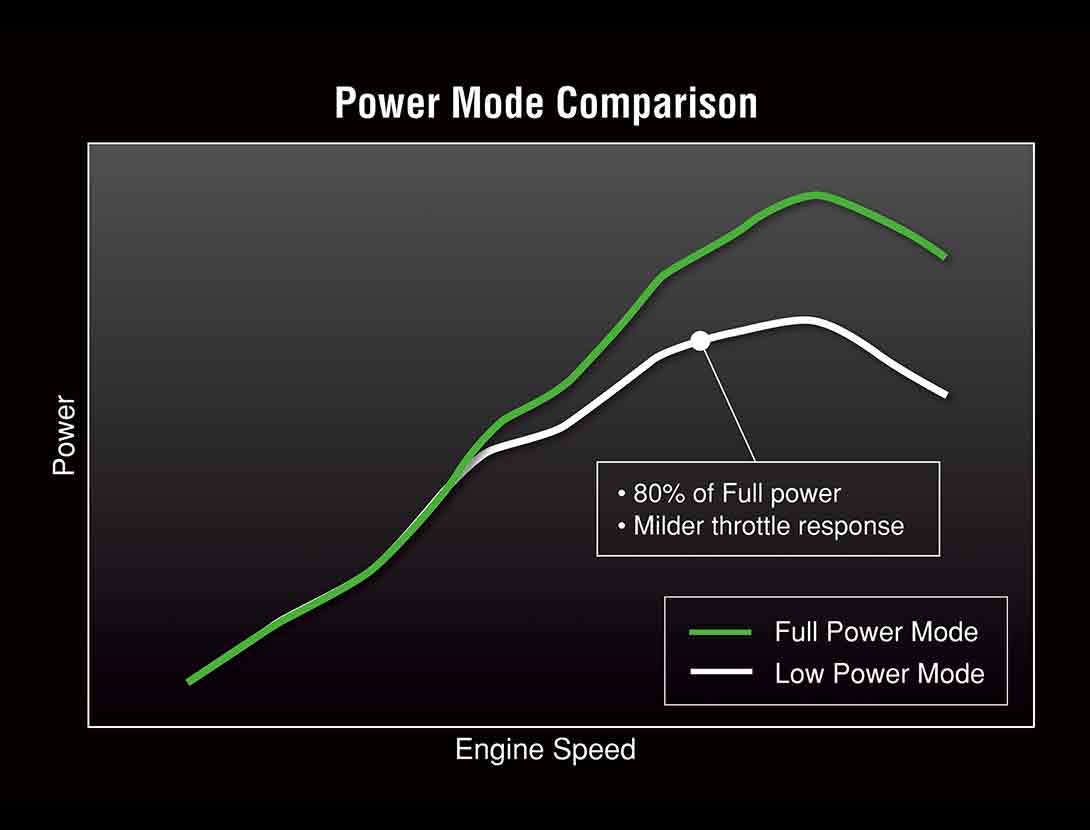
2026 Kawasaki Z1100 SEPOWER MODES

Models equipped with multiple Power Modes offer riders an easily selectable choice of engine power delivery to suit riding conditions or preference. In addition to Full Power mode, one (Low) or two (Middle, Low) alternate mode(s) in which maximum power is limited and throttle response is milder are provided.

Chassis Management Technology

ABS (ANTI-LOCK BRAKE SYSTEM)

Kawasaki ABS systems use front and rear wheel sensors to constantly monitor wheel speed. Should information from either of the sensors indicate that wheel lock has occurred, the ABS ECU directs the pump in the ABS unit to modulate brake fluid pressure (releasing and reapplying pressure so that traction can be regained) until normal operation resumes. ABS offers rider reassurance that contributes to greater riding enjoyment.

ERGO-FIT

Proper fit is key for rider comfort and control. However, the ideal fit varies from rider to rider, depending on their physical dimensions and riding style.

ERGO-FIT is an interface system designed to allow riders to find their ideal riding position. Various points of the chassis interface (the handlebar, footpegs and seat, etc.) can be adjusted through a combination of interchangeable parts and parts with adjustable positions. This enables a wide range of riders to find a riding position that offers both comfort and control. Feeling at one with their machine, they will be able to experience how Kawasaki machines are fun and rewarding to ride.

*Adjustable parts and their range of adjustability vary by model.

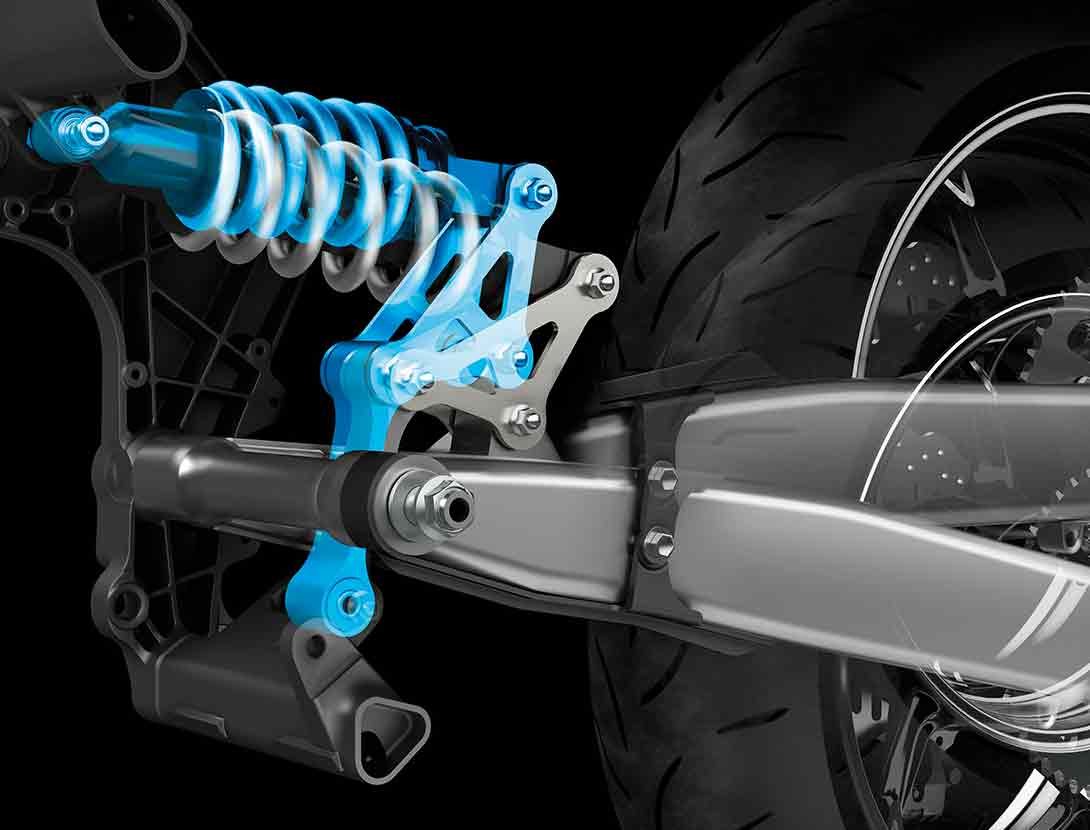
2026 Kawasaki Z1100 SEHORIZONTAL BACK-LINK REAR SUSPENSION

Compared to the Kawasaki traditional Uni-Trak rear suspension, which mounts the shock unit vertically, with Horizontal Back-link Rear Suspension, the shock unit is almost horizontal. The original Kawasaki suspension arrangement locates the shock unit very close to the bike's center of gravity, greatly contributing to mass centralization. And because there is no linkage or shock unit protruding beneath the swingarm, this frees up space for a larger exhaust pre-chamber (an exhaust expansion chamber situated just upstream of the silencer). With a larger pre-chamber, silencer volume can be reduced, and heavy exhaust components can be concentrated closer to the center of the bike, further contributing to mass centralization. The result is greatly improved handling.

A secondary benefit is that the shock unit is placed far away from exhaust heat. Because it is more difficult for heat from the exhaust system to adversely affect suspension oil and gas pressure, suspension performance is more consistent.

2026 Kawasaki Z1100 SEIMU-ENHANCED CHASSIS ORIENTATION AWARENESS
The strength of Kawasaki’s cutting-edge electronics has always been the highly sophisticated programming that, using minimal hardware, gives the ECU an accurate real-time picture of what the chassis is doing. Kawasaki’s proprietary dynamic modeling program makes skillful use of the magic formula tire model as it examines changes in multiple parameters, enabling it to take into account changing road and tire conditions.

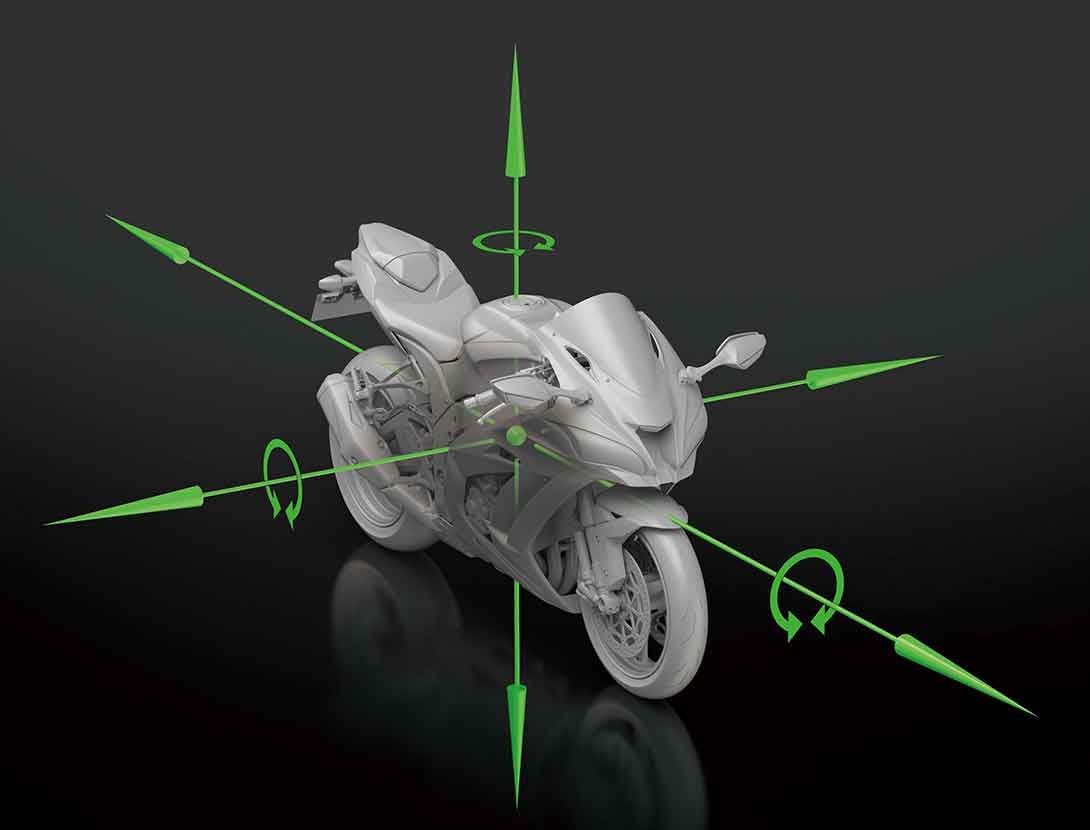
The addition of an IMU (Inertial Measurement Unit) enables inertia along 6 DOF (degrees of freedom) to be monitored. Acceleration along longitudinal, transverse and vertical axes, plus roll rate and pitch rate are measured. The yaw rate is calculated by the ECU using Kawasaki original software. This additional feedback contributes to an even clearer real-time picture of chassis orientation, enabling even more precise management for control at the limit.

With the addition of the IMU and the latest evolution of Kawasaki’s advanced modeling software, Kawasaki’s electronic engine and chassis management technology takes the step to the next level – changing from setting-type and reaction-type systems to feedback-type systems – to deliver even greater levels of riding excitement.

power
Power
100 kW {136 PS} / 9,000 rpm
Clutch
Wet multi-disc, manual
Engine
1,099cc, liquid-cooled, 4-stroke, DOHC 16-valve in-line four
Torque
113 Nm {11.5 kgfm} / 7,600 rpm
Ignition
Digital
Starting
Electric
Final Drive
Chain
Fuel System
Fuel injection: ø38 mm x 4
Lubrication
Forced lubrication, wet sump
Transmission
6-speed, return
Bore X Stroke
77.0 x 59.0 mm
Compression Ratio
11.8:1
performance
Frame
Twin-tube, aluminum
Rear Tire
190/50ZR17M/C (73W)
Front Tire
120/70ZR17M/C (58W)
Rear Brake
ø260 mm disc with single-piston caliper
Front Brakes
Dual semi-floating ø310 mm Brembo discs with radial-mount, Brembo M4.32 monobloc, opposed 4-piston calipers
Rake / Trail
24.7° / 110 mm
Steering Angle (L/R)
29° / 29°
Rear Suspension / Wheel Travel
Horizontal Back-link, Öhlins S46 gas-charged shock with rebound damping and remote spring preload adjustability / 136 mm (5.4 in)
Front Suspension / Wheel Travel
ø41 mm inverted fork with compression and rebound damping and spring preload adjustability / 120 mm (4.7 in)
details
Warranty
12 months
Wheelbase
1,440 mm (56.7 in)
Curb Weight
221 kg (487 lb)
Seat Height
815 mm (32.1 in)
Fuel Capacity
17 litres
Road Clearance
125 mm (4.9 in)
Instrumentation
Full-colour TFT screen with digital speedometer, digital tachometer, gear position indicator, shift lamp, fuel gauge, odometer, dual trip meters, current and average fuel consumption, remaining range, average speed, total time, coolant temperature, clock, battery voltage, KQS, Electric Cruise Control, Kawasaki service reminder, oil change reminder, Riding Mode indicator, smartphone call and mail notices, smartphone battery level, headset, voice command status and riding log status indicators, RIDEOLOGY THE APP indicator, Economical Riding Indicator, and turn-by-turn navigation display; and lean angle indicator, acceleration/deceleration indicator, and maximum lean angle (on the Type 2 display)
Estimated Dry Weight
201 kg (443 lb)
Dimensions (L X W X H)
2,055 x 825 x 1,085 mm (80.9 x 32.5 x 42.7 in)
Kawasaki Protection Plus
12 / 24 / 36 / 48 months